
How should a dental practice choose its marketing mix?
Digital marketing strategies for dentists should guide suitable people from a local search or recommendation to the right appointment conversation. This guide is for practice owners who need to attract new-patient bookings, treatment enquiries and returning patients without treating a form submission as a completed appointment. The strongest plan separates urgent needs from considered treatments, makes local details clear and measures broad booking stages with appropriate privacy checks.
Start with a short inventory of services, locations, payment information that the practice has approved for publication, appointment routes and capacity to respond. Marketing is not suitable for promoting services the practice does not offer, availability that cannot be confirmed or clinical outcomes that require individual assessment. Have the practice approve treatment wording, advertising claims, consent processes and any patient material before publication.
1. Separate patient journeys by urgency and intent
A single campaign and generic home page can mix people who need prompt attention with prospective patients researching a routine visit or a treatment consultation. Separate these journeys because their questions, timing and booking routes differ. This helps reception identify whether a contact is a new-patient booking, a treatment enquiry or a returning-patient request.
Prioritize this tactic when calls often concern unavailable services, people arrive expecting a different appointment type, or paid search is sending all visitors to the same page. Create three simple briefs: urgent appointment requests, general or new-patient visits, and consultations for treatments the practice provides. Each brief should state service scope, location, approved response process and a clear action.
Example: An urgent-care search ad points to a page explaining how to request prompt contact, while an implant enquiry reaches a consultation page that explains location and how availability is discussed. Measure broad enquiry categories, booked visits and attendance rather than only total contacts.
Keep clinical decisions out of marketing copy
Marketing can explain how to request a discussion, but it should not diagnose a visitor or promise that a named treatment is suitable. Use practice-approved wording that identifies the service and explains that individual options are discussed at an appointment.
Briefing check
Before publishing, confirm the promoted service, practice location, contact route, availability wording, payment statements and the staff member responsible for updating changes.
2. Build a dentists marketing plan around capacity
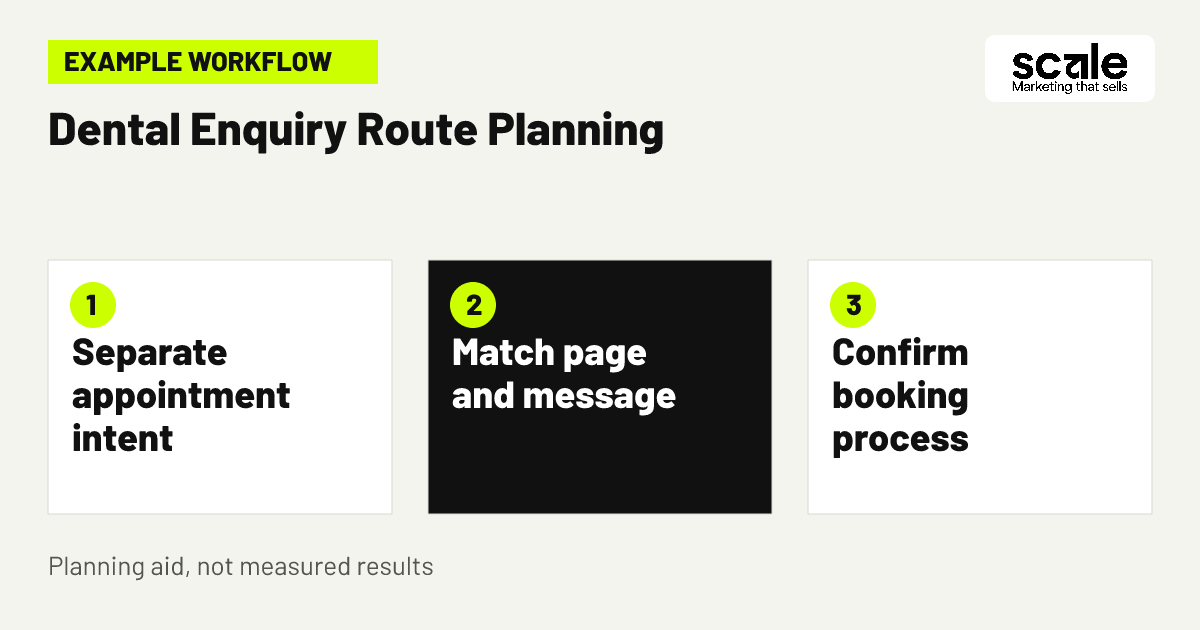
A dentists marketing plan should begin with the appointments the practice wants and can handle, not a list of channels to activate. Agree which new-patient appointment types, consultations and returning-patient reminders deserve priority. Then choose the page, campaign or follow-up route that moves each audience to one sensible next action.
Create a working plan with an owner, approved message, destination page, response route and measurement stage for every priority. Give urgent requests a visible contact option, give considered treatments a consultation-oriented page and give returning patients a permission-based reminder route. Review whether reception can respond consistently before increasing promotion.
Example: A practice with capacity for routine new patients but limited consultation availability promotes its new-patient page locally, keeps treatment information educational and asks interested visitors to request availability rather than implying immediate booking. Measure suitable requests by appointment category and adjust the plan when capacity changes.
3. Make local practice pages answer booking questions
Local discovery matters because patients need to know whether a practice is convenient before they contact it. A useful practice page should make the address, contact details, service area, appointment route, team information and approved practical details easy to find. This supports trust and gives local visitors a reason to continue rather than return to search results.
Prioritize local page improvements when reception frequently answers questions about location, access, services or how a first appointment works. Review the contact page, primary service pages and business listings together so the published details do not conflict. For dentists local seo, create separate location pages only where each has genuinely distinct information about a clinic, access or services.
Example: A practice with two locations publishes a page for each site that identifies which appointment types can be discussed there and how to contact that location. It does not create copied pages for every nearby suburb. Measure contact-route clicks and broad enquiry fit by page, then improve the page creating repeated confusion.
4. Create service pages for treatment enquiries
Treatment research can take longer than an urgent or routine appointment decision. A service page should answer what the practice can discuss, where a consultation occurs, how to request one and which practical questions the team can clarify. It should not use outcome promises or language that implies suitability without an assessment.
Prioritize service pages for treatments that the practice actively provides and that generate recurring questions. Ask the clinical team to approve the description, consultation process and any published payment information. Link each supporting article to the relevant consultation route, rather than leaving a visitor at a general information page.
Example: A page about a cosmetic consultation explains the first contact process and links to the relevant clinic details. It invites an enquiry about availability, not a declaration that a visitor will receive a particular result. Measure consultation requests, booked consultations and attendance through restricted internal stages.
5. Use search ads for high-intent local demand
Search advertising can place an approved message in front of people actively looking for a dental practice or appointment. It is most useful when the campaign, ad message and landing page all match one defined need. Separate urgent care, general dentistry and specific consultations rather than allowing one message to cover every service.
Prioritize paid search when a practice needs more immediate visibility for an approved appointment category and has a clear page and response process. Start with a small, tightly focused structure: service intent, practical location coverage, approved ad wording and a matching page. Check current platform rules and eligibility before using any restricted advertising product or audience option.
Example: A general new-patient campaign sends visitors to a page about arranging a first visit, while urgent searches go to a distinct request route. Google Ads Management can support campaign separation and message alignment. Measure approved contact actions, enquiry relevance, booked visits and attendance, not clicks alone.
6. Improve the mobile route to appointment contact
Many prospective patients will check location, services and contact options on a phone. A page that hides the phone route, uses a long form or makes people search for practical details can lose a suitable enquiry even when its advertising or SEO is strong. The goal is a clear request path, not a more elaborate form.
Prioritize this work when mobile visitors reach key pages but few reach the contact route, or when staff hear that people could not find how to enquire. Test the page on common screen sizes: confirm the practice location, main action, call option, form labels and confirmation message are visible and functional.
Example: A new-patient page places Request an appointment near the opening content and states that the team will discuss availability after contact. It also offers a phone option for people who prefer it. Measure contact clicks and confirmation-page visits after privacy review, then check whether these contacts become booked visits.
7. Simplify forms and protect patient information
Forms should support a marketing enquiry without inviting unnecessary health information. Ask only for the details needed to respond, such as name, preferred contact method and broad appointment interest, subject to the practice's approved process. Free-text treatment descriptions, symptoms and appointment notes should not be sent into advertising or general analytics systems.
Prioritize a form review before adding tracking, changing a booking tool or launching a campaign. Check who receives submissions, where they are stored, which connected tools can access data and whether confirmation pages or page addresses reveal sensitive information. Obtain appropriate privacy and legal advice for the practice's circumstances.
Example: A treatment page uses a short consultation-request form and directs clinical questions to the appropriate conversation with the team. The marketing report records only an approved completion signal. Measure completed contact actions alongside protected internal statuses such as requested, booked and attended.
8. Earn reviews through respectful service follow-up
Reviews can help local prospects assess a practice, but requests must be fair and respectful. Invite feedback from patients through an approved process without incentives, pressure or review gating. Do not assume that an online review permits the practice to reuse the patient's name, image, words or treatment details in advertising.
Prioritize review process improvements when local visibility is weak or prospective patients ask for reassurance about the practice experience. Decide who sends a request, when it is sent and how consent requirements apply. Give all appropriate patients the same opportunity to leave an honest review rather than filtering requests by likely sentiment.
Example: After an appropriate appointment process, the practice sends a neutral feedback request through its approved communication channel. Staff respond to operational themes without discussing private details publicly. Measure review volume and recurring non-clinical themes, then correct issues such as unclear directions or booking instructions.
9. Publish useful content before patients are ready
Helpful content supports people who are not yet ready to request an appointment. Choose topics from real pre-booking questions, such as how a first visit is requested, what a consultation can cover, which locations provide a service or how the practice discusses payment. Keep content factual, approved and connected to a relevant next step.
Prioritize content when the same basic questions repeatedly reach reception or when treatment pages need context without becoming overly long. Create one page per decision question, then link it to the relevant service or contact page. Avoid diagnosis, individualized treatment recommendations and copied local content.
Example: A short article explains what happens when someone requests a first appointment and links to the new-patient contact route. SEO Services can support a content structure that makes service and location information easier to find. Measure visits to the article, onward clicks and the quality of resulting enquiries.
10. Follow up with permission and clear expectations
A suitable enquiry can still be lost if the response process is unclear. Follow-up should match the person's consent and preferred contact method, explain the practical next step and avoid turning marketing messages into clinical discussions. Keep messages aligned with the page or campaign that generated the contact.
Prioritize this tactic when many people enquire but few arrange a booking, or when staff give inconsistent replies. Write a concise response guide for new-patient requests, treatment consultations and returning patients. It should cover availability discussion, location confirmation and the next contact step, while leaving clinical assessment to the appointment.
Example: A visitor requests a consultation and receives a permitted reply explaining that the team will discuss suitable appointment times. If contact is unsuccessful, any later reminder follows the practice's consent process. Measure attempted contact, booked visits and attendance in restricted records, then diagnose the stage where progress stops.
11. Reconnect with returning patients appropriately
Returning patients are different from prospective new patients because the relationship and permissions may differ. Appropriate reminders or seasonal messages can encourage people to reconnect, but the practice must use its approved consent, privacy and communication procedures. Do not assume prior contact allows unrestricted promotional messaging.
Prioritize this strategy when the practice has a legitimate, permission-based way to communicate and a clear message that is useful to the recipient. Segment only at a level that is permitted and necessary, such as a general reminder to contact the practice about arranging a routine visit. Avoid exposing treatment information in broad marketing systems.
Example: A practice sends an approved general reminder to consented contacts with a direct route to ask about appointment availability. The message does not disclose sensitive history or imply a clinical need. Measure reply or contact actions and subsequent bookings through the practice's protected process.
12. Connect advertising, SEO and reception feedback
Channels work better when they share the same facts about service scope, location and next steps. Search ads can reveal high-intent questions, local pages can answer them in more depth and reception feedback can show whether the message attracted appropriate contacts. This coordination avoids treating every channel as a separate project.
Prioritize channel coordination when one source drives contacts but staff report repeated mismatches. Hold a short review of search terms, landing pages, local listings and broad booking outcomes. Change one clear problem at a time, such as a misleading service phrase or a missing location detail, before expanding activity.
Example: Reception reports repeated requests for a service not offered at one location. The practice updates the relevant page, checks ad wording and directs any supporting content to the correct service route. Measure whether the broad unsuitable-enquiry category falls after the approved change.
Marketing mistakes that create poor-fit dental enquiries
A common mistake is optimizing for raw calls or form completions. A high contact count can hide enquiries from outside the service area, requests for unavailable services and people who expected a confirmed appointment. Diagnose this by using a small set of restricted status labels that distinguish received, suitable, booked, attended and unsuitable contacts.
Another mistake is publishing broad claims that staff cannot support. Check service, availability, location and payment wording across ads, pages, business listings and response messages whenever arrangements change. If reception repeatedly corrects an expectation, the original marketing message needs revision.
Avoid using patient photos, testimonials or treatment stories without appropriate written authorization and a review of applicable privacy and advertising requirements. Online reviews do not automatically grant permission for reuse. Marketing education is not legal or medical advice; practices should obtain advice appropriate to their obligations.
How should dentists measure marketing performance?
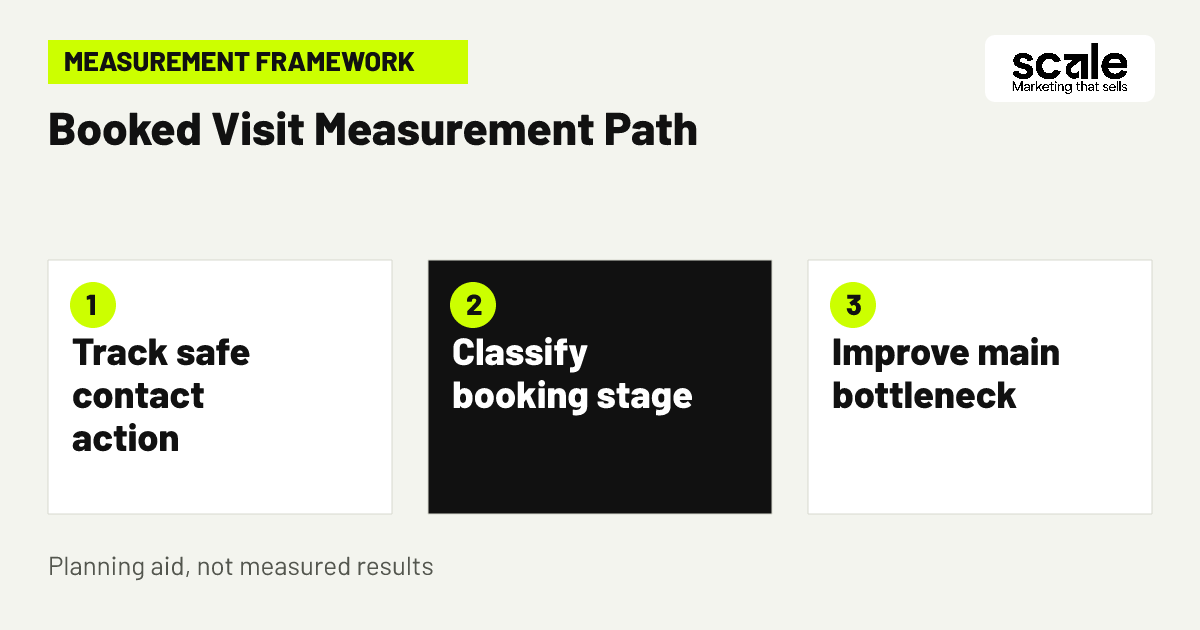
Measure the full path from a relevant page or campaign to an approved contact action, then to enquiry received, booked visit and attendance. Keep marketing reporting focused on non-sensitive actions and use a restricted internal process for later booking status. This distinguishes new-patient bookings, treatment enquiries and returning-patient activity without copying patient details into analytics.
Events can measure website interactions such as page loads and link clicks. Before relying on them, define the approved action, test that the event fires at the intended point and check that it does not transmit form entries, treatment details or revealing context. Review implementation whenever forms, consent settings or pages change.
Read the signals in order. If visitors reach a page but do not contact the practice, check mobile usability, page clarity and the visibility of the contact route. If contacts are plentiful but unsuitable, inspect service, location and payment wording. If suitable contacts do not book, review follow-up and availability communication before blaming the campaign.
A practical reporting view
Use a simple monthly view by appointment category and broad source: approved contact actions, suitable enquiries, booked visits and attendance. Keep definitions stable so changes represent the journey rather than a renamed status.
What to do next
Choose the weakest stage, verify the tracking or status process, make one approved change and ask reception whether the same source of confusion persists.
Conclusion: start with the appointment path that matters most
The best digital marketing strategies for dentists make it easier for the right person to understand the practice, choose a relevant appointment conversation and contact the team safely. Begin with the path closest to a current business priority: urgent appointment requests, new-patient bookings, treatment consultations or permission-based returning-patient communication.
This week, select one high-intent page and review it with a practice decision-maker and reception lead. Confirm the service description, location, contact route, response expectation, form fields and approved measurement signal. Fix the single clearest mismatch, then compare broad enquiry quality and bookings before adding another tactic. Digital Marketing support can help review privacy-conscious tracking and connect the channel decisions to the wider plan.
Related resources
Dentist Marketing · Google Ads Management · SEO Services · Digital Marketing · 11 Dental SEO Ideas to Attract Implant Consultations · 12 Google Ads Tips for Dental Emergencies That Drive Bookings · 10 Dental Website Conversion Tips for More Bookings