
Key takeaways
Define an acceptable enquiry by service, location, timing and capacity so every team member assesses fit consistently.
Use accurate profile details and a clear response owner to reduce confusion before a prospect reaches your team.
Separate poor-fit contacts from missed or delayed follow-up, then fix the recurring cause rather than chasing lead volume.
Review booking movement and decline reasons together before changing services, coverage or availability.
What turns Local Services Ads enquiries into bookable work?
Local Services Ads lead quality improves when your profile, service scope, response process and booking handoff all describe the work your team can genuinely accept. This guide is for local businesses that want suitable customer enquiries and a more dependable route to appointments or jobs. The direct answer is to define lead fit first, make the profile support it, and record every outcome so changes are based on evidence rather than frustration.
This service is suitable when your category and location are eligible, required onboarding can be completed, and someone can reliably answer calls or messages. It is not a good fit when your service list is unsettled, your team cannot accept new work, or nobody owns incoming enquiries. Availability varies by category and location, so confirm eligibility and operational readiness before seeking more demand.
Sources: Getting started with Local Services Ads - United States - Local Services Help
1. Set one shared definition of a qualified lead
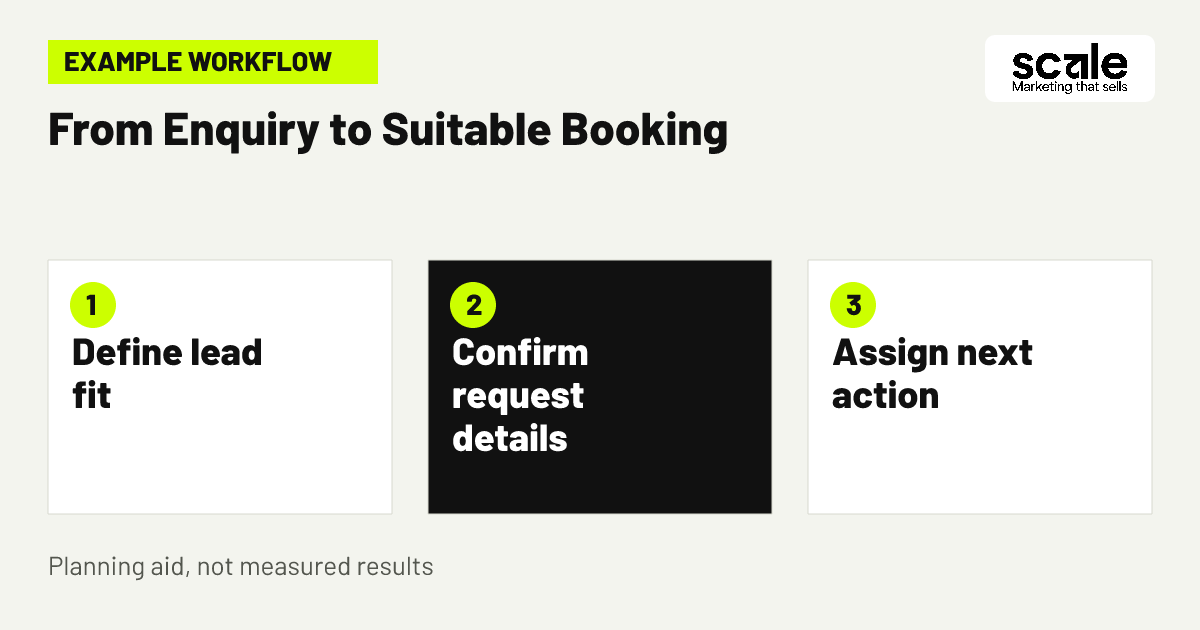
Write a short acceptance rule before evaluating advertising. Qualified service leads match a service you offer, sit within a practical service area, have a workable timing need, and can take the next sensible step. This gives office staff and field teams the same standard, rather than leaving each person to label a call good or bad based on instinct.
For a home repair company, the rule might be: requests for listed repairs from property owners in the active area, where the team can arrange an assessment or visit. Requests outside scope, too far away, or requiring unavailable timing should still receive a courteous response. Tag them as a fit issue so the business can distinguish them from leads that were suitable but never handled properly.
2. Match the profile to jobs you can schedule
Review every selected service, business detail and service-area statement against your current capacity. Remove broad language that regularly attracts requests you decline. Specific information helps a prospective customer self-select, but it should not promise availability, response timing or job scope your team cannot consistently support.
Create a plain internal profile brief: services to promote, customers you can serve, places you cover, usual next step, and requests to redirect. For example, a cleaning company might clarify whether it is seeking recurring residential work, one-time cleans, or both. This is a practical way of reducing poor-fit leads before staff invest time in long conversations.
Sources: Getting started with Local Services Ads - United States - Local Services Help · About ad rankings - Local Services Help
3. Test one job type before changing everything
Example: a landscaping business receives a mixture of ongoing maintenance requests and major design enquiries. The owner chooses to improve qualification for maintenance work first. The business keeps its normal coverage and staffing stable, updates its internal call notes, and asks about address, requested work, preferred timing and property type.
Each contact is then marked as suitable to book, suitable for follow-up, outside service scope, outside area, unavailable timing, duplicate or unreachable. This focused test does not assume that every suitable prospect will book. It helps the owner see whether the issue is profile clarity, the response process, capacity, or a mismatch between the request and the offer.
4. Use profile details to answer booking questions early
A ready-to-book customer needs confidence that you handle the requested service and operate nearby. Check selected services, business information, service-area details, images and completed verification steps for accuracy. Local Services ranking considers the customer search context, relevance of the business, responsiveness and profile quality, so accuracy is more useful than trying to sound broad.
Ask the person handling enquiries which questions repeatedly end a call. Confusion about job type, location or whether you can help may signal a profile gap. When callers understand the service but hesitate later, the issue may instead sit in scheduling or the conversation that follows. Use those differences to choose the right fix.
Turn repeat questions into profile checks
Read the profile as a new customer, then compare it with your acceptance rule. If it invites a request your staff would normally decline, correct the listed service or wording before asking the team to work harder on follow-up.
Sources: Getting started with Local Services Ads - United States - Local Services Help · About ad rankings - Local Services Help
5. Assign an owner for local lead follow-up
Decide who owns local lead follow-up at each time of day and what happens when that person is unavailable. The owner should acknowledge the contact, gather only the details required to establish fit, and give a defined next action. This could be a booking conversation, an assessment request, a callback or a polite decline.
Use a short handoff note whenever the first person cannot finish the interaction. Include requested service, location, contact preference, urgency stated by the prospect and promised action. Regularly missed calls or unanswered messages can affect responsiveness, so lead coverage is both a customer experience responsibility and an account-health check.
Sources: Getting started with Local Services Ads - United States - Local Services Help · About ad rankings - Local Services Help
6. Ask natural questions that establish fit
Lead qualification should feel like helpful guidance, not an interrogation. Start by acknowledging the request, then confirm location, the service needed, relevant timing and what the customer needs to move forward. The goal is to decide whether the business can offer an appropriate next step with enough context to prepare properly.
A pest control business, for example, can ask what type of issue the customer has noticed, where it is occurring and when they hope to arrange service. The team can then explain the appropriate next action without making unsupported promises. Review call notes to see whether staff collect consistent information and whether fewer leads need to be transferred or called again.
7. Separate unsuitable leads from unhandled leads
Do not classify every unbooked contact as low quality. A request may be unsuitable because it is outside your scope, but another may be a good fit that was lost to a missed call, slow reply or unclear handoff. These require different remedies, and combining them makes the advertising look worse or better than it really is.
Use reason labels that make the distinction visible: outside service, outside area, unavailable timing, capacity full, no response, customer paused, duplicate, or suitable and booked. A suitable lead that was not contacted points to staffing or notifications. A repeated service mismatch points to profile or selected-service review. This is the core discipline behind useful lead-quality decisions.
8. Pause demand when capacity cannot support it
Set a practical rule for when someone may pause advertising activity because the business is too busy to accept enquiries. Triggers could include an unmanageable backlog, key staff absence, a full schedule or a temporary inability to serve your normal area. Local Services Ads accounts can be paused, which is preferable to attracting people who will receive no useful response.
Record availability-related declines separately from poor-fit requests. If people want suitable work but your diary is full, the immediate problem is capacity rather than audience quality. When capacity returns, reopen carefully and confirm the response owner is in place. Outcomes vary, but this protects customer expectations while making your records more meaningful.
Sources: Getting started with Local Services Ads - United States - Local Services Help
9. Make the next booking step easy to understand
Decide what should happen after a suitable contact: a scheduled visit, assessment, specialist callback, or request for more information. Train staff to explain that next step plainly, including what the customer should prepare and who will contact them. A vague promise to get back in touch often creates uncertainty and makes suitable enquiries harder to recover.
Where booking is available and appropriate, use it only when the process reflects real availability. Booking availability differs by category and region, and booking leads are not available for health care verticals. Calls and messages can still progress effectively when there is a clear callback process and a named owner for the handoff.
Sources: Getting started with Local Services Ads - United States - Local Services Help
10. Route overlapping locations to one accountable team
If several locations or teams can serve the same place, decide which one owns each practical area and how exceptions are transferred. Overlap is not a substitute for a routing plan. Local Services may show only the highest-ranked ad when multiple business locations serve the same geographic area, so duplicate coverage does not guarantee more useful exposure.
Base routing on the team most able to fulfil the request, not on internal competition. A customer should not have to repeat the same service need while offices decide responsibility. Review transferred contacts for recurring patterns. If one location repeatedly receives enquiries another team must serve, clarify the internal boundary and update the profile details where needed.
Sources: About ad rankings - Local Services Help
11. Review conversations for expectation gaps
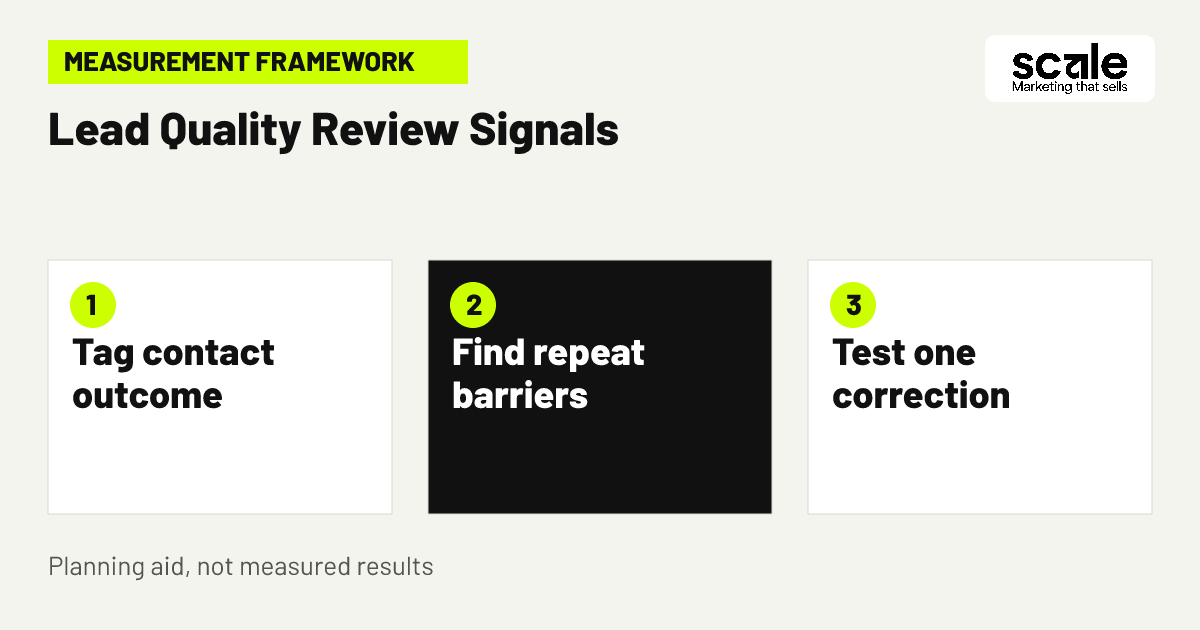
Look for repeated phrases in call notes and messages: customers seeking an unoffered service, expecting a timing you cannot support, or assuming a different type of provider. These signals show where expectations shifted between search, profile and conversation. They are more actionable than a general complaint about bad leads.
Turn repeat themes into one documented correction. If service expectations are wrong, revisit the selected services and business description. If timing is the problem, check availability and response coverage. If staff explanations vary, return to the acceptance rule and handoff process. Change one important variable at a time so you can tell what improved or worsened fit.
12. Judge the Local Services Ads booking rate by fit
A Local Services Ads booking rate is only useful when it distinguishes contacts that had a realistic chance to become work from contacts you could never accept. Review suitable leads that reached a booking step alongside suitable leads that did not, then read the reason notes. A smaller flow of relevant conversations can be more manageable than a larger volume of requests your team must decline.
Your weekly record should include contact method, requested service, area, response status, fit category, next action, booking status where available and reason for no booking. Account tools can help you manage leads and track bookings in supported locations, while your internal notes explain why a prospect moved forward, paused or did not fit your business.
Sources: Getting started with Local Services Ads - United States - Local Services Help
Marketing mistakes that disguise the real lead problem
The most frequent mistake is treating every unwanted contact as proof that the advertising is poor. That can hide an unclear service list, impractical coverage, a full diary or a missed reply. Another mistake is leaving outdated profile information live after services, staffing or availability change. Both create avoidable enquiries and make campaign decisions less reliable.
Avoid asking for excessive information before acknowledging the customer. Also avoid vague notes such as not interested or bad lead, which do not explain what happened. Review a sample of records: can a manager see what was requested, whether it fitted, who replied and what next action was offered? If not, simplify the process before changing lead settings.
Do not confuse volume with suitability
More contacts do not automatically mean more workable opportunities. A useful review asks whether the business could serve the request, responded in time, and gave the customer a clear path forward.
Diagnose the bottleneck before expanding
When the same decline reason appears repeatedly, solve that constraint first. Profile mismatch calls for clearer service information; slow response calls for better cover; scheduling strain calls for capacity decisions.
Sources: Getting started with Local Services Ads - United States - Local Services Help · About ad rankings - Local Services Help
Measure fit, responsiveness and progress toward jobs
Use one compact lead record for every call or message: requested service, location, contact method, response status, fit decision, next action, booking outcome and reason when the lead did not progress. Keep customer information only where necessary for service and handle it responsibly. The aim is a usable operating view, not a complex reporting exercise.
Interpret the signals in sequence. Frequent out-of-scope contacts suggest a profile or service-selection issue. Suitable leads with delayed replies point to follow-up coverage. Suitable conversations that stall before an agreed next step may indicate unclear scheduling or expectation setting. Prioritize the repeated constraint with the clearest evidence, make one focused change, then review new records using the same labels.
Run a short owner-led weekly review
Have the person closest to enquiries summarize accepted, declined and unresolved contacts. The purpose is to identify where suitable prospects stop progressing, not to assign blame.
Choose the next action from the signal
Correct recurring profile mismatch, strengthen response cover when acknowledgement is weak, and review the booking conversation when suitable prospects repeatedly fail to take the agreed next step.
Keep the test narrow
Do not change coverage, services, staffing and wording at the same time. A narrow change leaves you with a clearer explanation for the next pattern in your lead records.
Sources: Getting started with Local Services Ads - United States - Local Services Help · About ad rankings - Local Services Help
Conclusion: build bookings around real service capacity
Better Local Services Ads lead quality comes from showing the right services, setting honest expectations, responding with ownership and recording why each enquiry did or did not reach a booking step. The most practical next action is to introduce a shared acceptance rule and lead log before making another profile or coverage change.
Once eligibility and capacity are confirmed, review the profile, service area and follow-up process together. Google Local Services Ads support can focus on eligibility, verification, service-area targeting and lead quality, but your team’s operational records should determine what requests you seek and what changes you keep.
Sources and further reading
Related resources
Google Local Services Ads · 11 Google Local Services Ads Service Area Targeting Tips