
A local rewiring page needs to qualify before it sells
Electrician SEO ideas work best for local rewiring enquiries when they help nearby property owners understand whether a planned project fits your coverage and give your team enough context to respond appropriately. This guide is for electrical businesses that want to promote rewiring and upgrade work without attracting a large volume of vague, out-of-area or unsuitable requests.
The direct answer is to build a clear path around the specific project: a useful rewiring page, accurate local details, service-area boundaries, a focused enquiry action and records that show what happens after contact. Rewiring is normally a considered enquiry, so the page should make the next step clearer rather than treating it like an urgent fault call. SEO Services can support this work by connecting people-first service content with real local coverage.
1. Decide which rewiring projects you want to attract
Start by defining the work the page is meant to promote. Decide whether you handle full-property rewires, partial rewiring, renovation-related electrical upgrades, landlord enquiries, older-home assessments or another genuine category. Also define the property types, travel boundary and times when someone can review planned-project requests. This keeps the page aligned with your crew, rather than presenting every electrical task as interchangeable.
Write a short service-fit statement before writing page copy. It might explain that you review planned rewiring projects in named areas, ask for the property location and project context, then confirm the suitable next step after review. Do not promise a site visit, fixed scope or availability before a person has checked the request. This statement should guide both the page and the staff response.
2. Build rewiring service pages around homeowner decisions
Useful rewiring service pages should answer the questions that arise before a homeowner contacts an electrician: what kind of projects you discuss, where you work, what details help you assess a request and what will happen after they enquire. Open with a plain description of the service, then use short sections for project fit, service area, your enquiry process and one clearly labelled primary action.
Keep technical detail at the level that helps a visitor describe their project. A renovation customer may know the property age, room changes or desired completion period but not the current electrical condition. Invite useful context without asking the visitor to diagnose wiring. This approach reduces uncertainty while preserving a careful assessment process.
Check the finished page on a phone. The service description, coverage statement, phone option and enquiry action should remain easy to find without forcing a visitor through a long general-services page. A page designed to help a person make an informed next decision is more useful than a thin page created mainly to repeat phrases.
Give the page one primary enquiry route
Use an action such as Request a rewiring assessment or Discuss your rewiring project. A general Contact us button can remain as a secondary option, but it should not hide the reason for the conversation. The wording should describe a review or discussion, not imply that work has already been scheduled.
Sample page brief
Brief: Explain planned rewiring work in plain language; state the real coverage area; ask for property type, area, project description and preferred contact method; confirm that the team reviews the request before agreeing the next step. Keep emergency fault messaging on a separate, accurately staffed route.
3. Map a rewiring enquiry from search to follow-up
Example: A homeowner planning a renovation searches for an electrician who can discuss rewiring in a town your business genuinely covers. They reach a rewiring page that explains the project types you review, states the coverage boundary and asks whether the work relates to a renovation, older wiring or another planned change. They send their area, property type and a short description through the form.
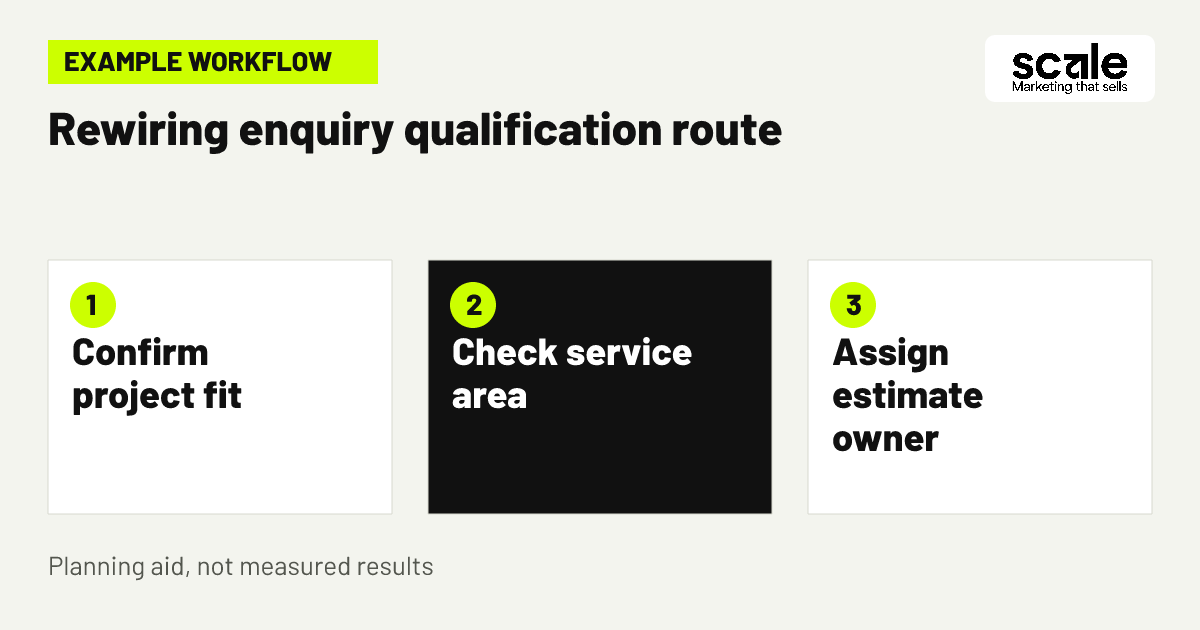
The confirmation message says the request was received and will be reviewed, without claiming an electrician is already on the way. Internally, the lead is labelled as rewiring, checked against the service area and passed to the person responsible for planned estimates. If the location is outside your boundary or the request is for a different job type, staff can respond honestly instead of trying to force it into the rewiring process.
This scenario gives marketing and operations a shared definition of a useful enquiry. Search visibility brings the visitor to the right page, the page captures the context needed for a conversation and the follow-up record shows whether the enquiry became a suitable estimate opportunity.
4. Use electrical upgrade search terms as page questions
Electrical upgrade search terms can reveal the language prospects use when they are planning work, but they should not become a list of disconnected phrases. Group related wording by the decision behind it. Someone searching for house rewiring may need a broad service explanation, while a renovation-focused visitor may need reassurance that you can discuss the electrical part of a planned remodel.
Turn each useful group into a section that answers a practical question. For example, describe the types of planned upgrade discussions you handle, explain what project information helps your team and clarify the areas you serve. Keep claims specific to work you really offer. Avoid writing technical conclusions about a visitor's property before an electrician has assessed it.
Review search wording alongside actual enquiry notes. If people repeatedly ask whether you work on occupied homes, rental properties or renovation projects, answer that question on the page where appropriate. If a recurring term brings work you do not offer, make the boundary clearer in the page wording and related promotion.
5. Set electrician service area SEO boundaries first
Electrician service area SEO begins with an operational decision: list places your team can genuinely attend and maintain that list when routes, staffing or availability change. Put the main coverage statement near the page's contact action, where it can prevent an unsuitable submission. Consistent details across your website and business information make it easier for prospects to judge fit.
Name towns, neighbourhoods or districts only when that level of detail is useful and accurate. A broad radius statement may be less helpful than a clear list if customers commonly search by town. Conversely, a long list of distant places may invite enquiries your team cannot reasonably serve. The goal is suitable local conversations, not a larger map.
Before publishing a coverage update, check the rewiring page, footer details, contact page and any relevant business profiles you control. Assign one person to approve future edits so an old location claim does not remain live after your service boundary changes.
A practical coverage review
Ask three questions for every location: Can the crew serve it? Does the business want planned rewiring work from it? Does the proposed page or section add useful local information beyond simply naming the place? If any answer is no, use a broader and more truthful coverage explanation.
What useful local detail looks like
Useful detail might explain the kinds of properties or planned projects you commonly discuss in that area, travel expectations you can support or a locally relevant contact route. It is not a copied paragraph with a town name replaced.
6. Make local electrical contractor listings consistent
Local electrical contractor listings should support the same reality shown on your website. Review the business name, main contact details, service description, opening information and areas shown wherever you manage a listing. Inconsistency can confuse a homeowner who compares details before calling, particularly when the rewiring project is planned rather than urgent.
Do not treat listings as a substitute for the rewiring page. A listing may help a local prospect discover your business, but the website should provide the fuller project explanation and enquiry path. Link the local message to a destination that matches the visitor's purpose instead of sending every person to a broad homepage.
Create a simple maintenance record that notes which listings are controlled, what coverage statement each uses and when it was last checked. When a phone number, service boundary or operating arrangement changes, update the record and verify the most important customer-facing information first.
7. Separate planned rewiring from urgent repair routes
A planned rewire and an urgent electrical fault require different messages. Keep the rewiring page focused on assessment and estimate enquiries, while any urgent route reflects only the hours and call handling your business can support. Mixing both on one form can make the homeowner unsure what to do and leave staff without enough context to prioritise the contact.
Use page labels and form choices that make the distinction easy. A visitor should be able to select a planned rewiring or upgrade enquiry without navigating emergency language. If they arrive with a repair issue, direct them to the appropriate advertised option rather than making the rewiring form carry every type of electrical request.
This separation can also inform Google Ads Management where paid promotion is part of your plan. Search messages and landing pages should match the service a person is seeking. Review the page experience and the eventual enquiry quality before expanding promotion.
8. Ask for details that help quote the right next step
A rewiring form should collect information your team will actually use: contact details, property area, property type, a short description of the planned project and a preferred way to respond. Optional prompts can ask whether the request relates to a renovation, an older property or a broader upgrade. Explain any field that may not be obvious to a visitor.
Avoid making technical knowledge a requirement for contacting you. A property owner may not know equipment names or the condition of existing circuits, and requiring that information can discourage a suitable enquiry. Replace specialist shorthand with plain requests for what the customer has noticed or what they are planning to change.
Test the full form path regularly. Check required fields on a mobile device, confirmation wording, spam filtering and the lead notification received by staff. A well-written page cannot compensate for a form that fails, produces incomplete records or sends enquiries to an unmonitored inbox.
9. Publish location pages only when they add real value
A location page is suitable only when it helps a person in that place make a better decision. It may explain genuine coverage, connect a local search to a relevant rewiring service and offer useful details that differ from the main page. It should never suggest you have an office, crew base or local availability that you do not have.
Before creating a page, compare it against the main rewiring page. If the only change would be a town name, improve the central service page and coverage section instead. A smaller collection of maintained, useful pages is more credible than many near-identical pages that give staff no extra context for handling enquiries.
Review every location page when your operating area changes. Remove or rewrite claims that no longer reflect where you work. Honest boundaries may reduce unsuitable submissions, which is a better outcome than making a local promise that creates frustration at the first call.
10. Connect each page to a named follow-up owner
Search visibility has limited value if rewiring enquiries disappear after submission. Define who receives planned upgrade requests, who checks the area and project information, and what record shows that contact was attempted. This is especially important when the person answering urgent calls is not the person who prepares larger-project estimates.
A simple routing rule can use the form's service type and area. Suitable rewiring requests go to the estimate owner; general repairs follow the repair route; and out-of-area requests receive a clear boundary response. AI Implementations may help organise notifications or reminders, but automated messages must only confirm receipt and review, never invent availability or commit a crew.
Review open enquiries and open estimates with the people responsible for them. If follow-up is delayed or details are routinely missing, fix the handoff before investing more effort in new traffic. A visible owner and status reduce the chance that a promising planned project becomes an untraceable inbox message.
11. Refresh pages from the questions real prospects ask
Treat recurring pre-enquiry questions as content opportunities. If homeowners regularly ask which areas you cover, what information to send or whether you discuss renovation rewiring, answer those questions on the relevant page. This makes the content more useful and can reduce unnecessary back-and-forth before a member of staff reviews the project.
Keep a monthly list of questions from calls, forms and estimate discussions, without publishing private customer details. Group them by page issue: unclear service fit, unclear location, unclear next step or missing project context. Choose one or two items that can be answered accurately and add them to the rewiring page or a supporting FAQ.
Do not expand a page simply to mention every possible electrical service. Retain a clear focus on planned rewiring enquiries, and link to another genuine service page only when a visitor's need is different. The page should leave a prospective customer knowing whether and how to contact you.
Marketing mistakes that create poor local rewiring leads
The first common mistake is creating dozens of location pages with identical service text. Diagnose it by comparing pages side by side: if the town name is the only meaningful difference, they are unlikely to give homeowners a reason to trust the information or help staff handle the resulting enquiry. Consolidate weak pages and strengthen the main service and coverage content.
Another mistake is hiding coverage until after a visitor submits a form. If staff often reject requests because of location, move the service-area statement beside the call to action and add an area field to the form. This is clearer for the prospect and gives the team a usable routing signal.
A third mistake is calling every form completion a success. A submitted request may be spam, outside the service area, a job you do not offer or a suitable project that nobody contacts. Use lead statuses that reveal the reason, then address the earliest point at which worthwhile enquiries are being lost.
Measure whether local visibility becomes suitable estimates
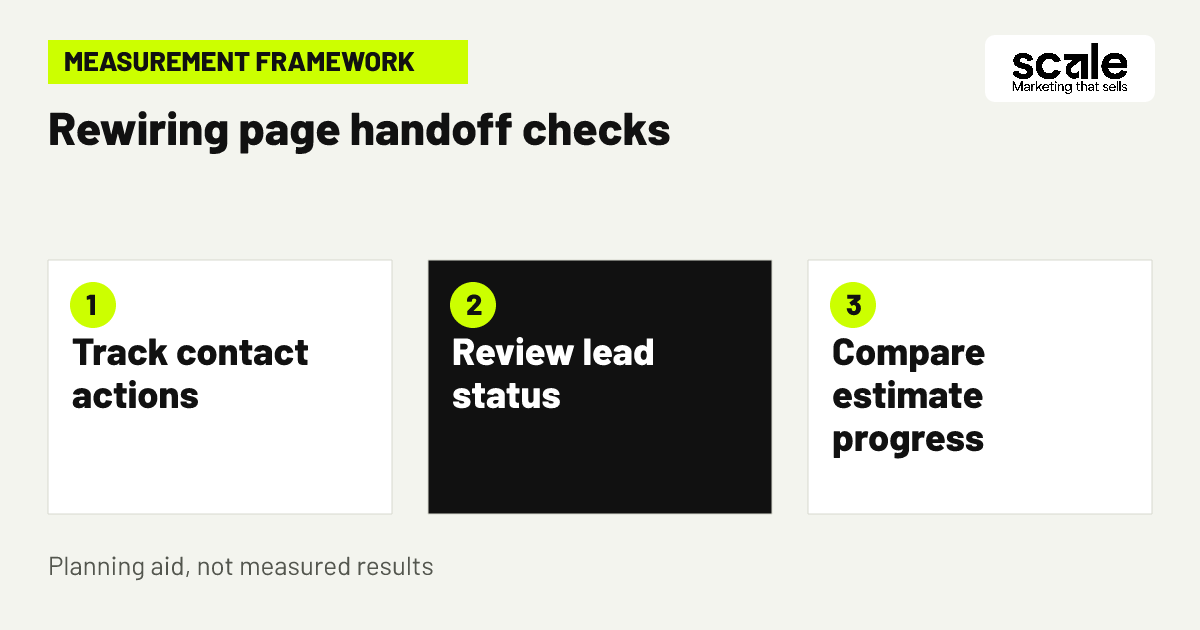
Measure the real rewiring journey: page views, clicks on the primary enquiry action, form starts, completed enquiries, successful contact, estimates prepared and booked work. Website events can record interactions such as page loads and link clicks, but they do not establish whether a project was suitable or became a job. Connect analytics with a simple internal lead record.
Interpret the signals in sequence. Many page visits with few contact actions can suggest unclear service fit, coverage or next-step wording. Many form starts with few completions can indicate too many fields, confusing language or a mobile problem. Completed forms with few successful contacts point to follow-up ownership, while many estimates without progression may show a mismatch between the page's expectations and the later conversation.
Check event implementation before making decisions from it. Analytics documentation explains that events measure site interactions and can be reviewed in Realtime and DebugView reports. Test a page view, contact click and successful form submission after publication, then reconcile those records with enquiry statuses. Make one targeted improvement at a time so you can identify what changed.
Conclusion: make rewiring SEO accountable to the enquiry
The strongest local approach is not a large collection of town-name pages. It is one accurate rewiring journey that explains service fit, reflects real coverage, captures useful project context and assigns every enquiry to a next step your team can deliver. Marketing outcomes vary, so judge the work by the quality and progression of enquiries, not visibility alone.
Take one practical next action: submit a test rewiring enquiry from a phone and follow it through the entire process. Check the coverage message, page wording, form, confirmation, internal notification and lead status. Fix the first break you find before adding more locations or increasing promotion.
Related resources
Electrician Marketing · Google Ads Management · SEO Services · AI Implementations · 10 Electrician Website Conversion Tips for EV Charger Quotes