
Panel upgrade campaigns need their own route to enquiry
Electrician Google Ads tips are most useful when they help a local electrical business turn planned panel upgrade searches into enquiries the team can review and progress. This guide is for electricians promoting upgrades while still handling repair work, and the direct answer is to separate the service, message, destination, schedule and lead record rather than sending every searcher into one broad campaign.
Panel work is usually a considered request. A property owner may be planning a renovation, adding equipment or responding to an issue identified elsewhere, while a repair caller may need help on a very different timetable. Before advertising, decide which panel-related work your crew wants, where it can be delivered and who owns the first response. Paid search can then support a clear customer journey instead of creating a mixed inbox.
1. Define the panel upgrade jobs you want to promote
Start with a written service-fit statement. Name the planned panel upgrade conversations you can review, the property types you want to hear from, the areas you serve and the information needed before arranging the next step. This is the decision that prevents broad ad copy from attracting work your business cannot take on.
Keep the statement customer-facing and careful. A suitable promise might say that your team reviews panel upgrade enquiries in its service area after receiving property and project details. Do not imply that an assessment, price, appointment or on-site work has already been confirmed. The same statement should guide ads, landing pages and staff replies.
Choose a boundary that staff can apply
Ask the person handling enquiries to list common requests that should be treated as repairs, planned upgrades, out-of-area work or services not offered. Those categories become campaign exclusions, form choices and lead statuses, rather than assumptions made after a prospect has waited for a reply.
Sample service brief
Promote planned panel upgrade discussions for properties within the stated coverage area. Ask for location, property type, the reason for the upgrade enquiry and a preferred contact method. Route accepted requests to the person responsible for estimates, not the urgent repair queue.
2. Build separate campaigns for upgrades and repairs
Create distinct campaign structures for panel upgrade ads and repair calls. Each should have its own search themes, ad wording, landing page and conversion labels. This gives a planned-project visitor a relevant next action and lets the business see whether promotion is generating the intended kind of enquiry.
Use ad language that describes a review, assessment or project discussion for upgrades. Reserve urgent wording for repair advertising only when your advertised hours and phone coverage support it. Google Ads Management can help maintain this separation, but the operational decision about what staff can answer must come first.
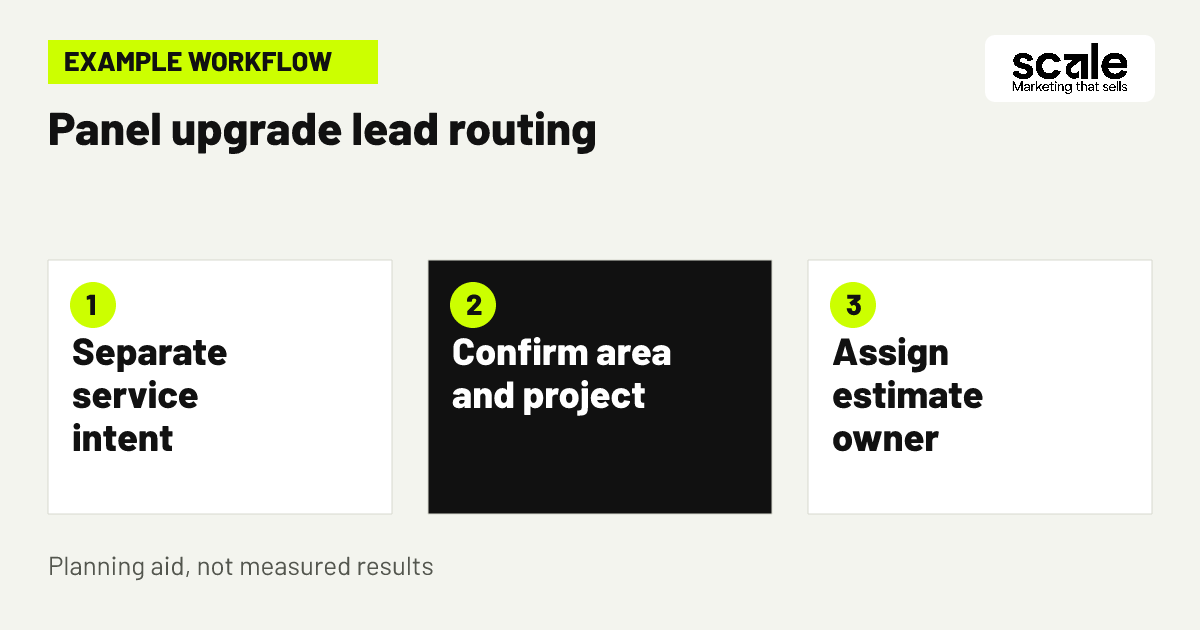
3. Map one panel enquiry from search to estimate
Example: A homeowner searches for help with a planned electrical panel upgrade and reaches an ad focused on upgrade discussions in the places your business genuinely serves. The landing page explains that the team reviews property location, project context and preferred contact method before agreeing the appropriate next step.
The visitor completes a short request with their area, property type and a description of the planned work. The enquiry is labelled Panel upgrade, checked against coverage and assigned to the estimate owner. If it is actually an urgent repair or outside the service area, the team records that reason and responds through the appropriate route. Nothing in the ad or confirmation claims that a visit is already arranged.
What this scenario is designed to reveal
The route makes it possible to diagnose whether a poor outcome began with the search message, the landing page, the area boundary, the form or the follow-up process. Without separate labels, a broad contact request can conceal the reason a planned enquiry did not progress.
4. Match location targets to real service coverage
Choose campaign locations based on where you want and can serve customers, not simply where the business is based. Google Ads supports selected geographic locations and radius targeting, but location signals are not exact boundaries. Put your coverage statement on the landing page and ask for an area in the enquiry path so staff can confirm fit.
Avoid making a tiny target the only route to demand, because narrow targets may not show consistently. Equally, do not target every nearby place and hope the form filters it later. Review out-of-area enquiries regularly and either refine the campaign boundary or make the service-area message clearer before spending more on traffic.
5. Send planned searches to a panel-specific landing page
A panel upgrade page should answer the questions that determine whether someone contacts you: what type of project you discuss, where you work, what details help your review and what happens after submission. Put one primary action near this explanation, such as Request a panel upgrade review, with a phone option only if calls can be handled appropriately.
Do not turn the page into a technical diagnosis. A homeowner can usually provide useful context such as property type, area, renovation plans or a reason for the enquiry without identifying equipment or causes. Keep repair and emergency messaging visually separate so a planned visitor does not have to guess which route applies.
Check the post-click promise
Read the ad and landing-page opening in sequence on a phone. The service named in the ad, the coverage stated on the page and the requested next step should agree. If any of these changes after the click, visitors may abandon the enquiry or submit details that staff cannot use.
Landing-page checklist in practice
Include the upgrade service, a truthful coverage statement, a brief explanation of the review process, a clear contact action and a confirmation that the request will be reviewed. Remove unrelated service lists that distract from the planned project.
6. Use electrician lead forms to capture useful context
Electrician lead forms should ask for details that change how your team handles the enquiry: name, contact method, property area, property type, upgrade reason, a brief description and a preferred time to respond. Each required field should help establish fit, enable contact or prepare the next conversation.
Make questions plain enough for a non-specialist. Ask what the customer is planning or what prompted the enquiry rather than requiring them to identify electrical components. Optional notes can capture additional context, but a long form may discourage a suitable prospect who does not yet know every detail. Test the form and confirmation message on a phone before launch.
7. Set an electrical repair ad schedule you can support
An electrical repair ad schedule should match the times a person can answer, assess or route calls honestly. This is especially important when repair advertising sits alongside planned upgrade promotion. If no one can handle urgent enquiries during an advertised period, change the schedule or message rather than creating an expectation the business cannot meet.
Google Ads allows ad schedules and, with eligible manual approaches, scheduling bid adjustments. If an automated bidding approach is in use, do not assume a manual adjustment will apply; check the current campaign settings. The practical priority remains simple: scheduled ads should lead to a reachable response path.
8. Write ads that filter the wrong intent early
Use panel-focused wording that names the planned service and calls for a review or project discussion. Include a genuine area cue when it helps prospects understand coverage. This can discourage job seekers, DIY information seekers and urgent fault callers from treating a panel campaign as a general electrical hotline.
Review the search wording and lead notes together. A search term may sound relevant but repeatedly produce a different type of request. In that situation, add a negative keyword where appropriate, clarify the ad language or improve the landing-page boundary. Do not broaden copy merely to attract more clicks when the resulting conversations are unsuitable.
9. Make Google Ads call tracking useful to staff
Google Ads call tracking should support lead qualification, not replace it. Record whether a call came from a panel campaign or landing-page phone action, then give staff a simple way to note service type, area, contact outcome and next status. A connected call by itself does not prove that it was a suitable upgrade opportunity.
Before relying on the data, place controlled test calls where practical and check that the campaign source, call record and internal lead note can be reconciled. If calls cannot be consistently classified, make the intake prompt simpler. For example, staff can ask whether the caller needs urgent repair help or wants to discuss a planned panel project.
10. Route upgrade leads to a named owner
Assign a named owner for every suitable panel enquiry. That person may not be the same person who handles repair calls, but the handoff must be visible. Route based on service type and area, then record whether the prospect was contacted, needs more information, received an estimate or was unsuitable.
Automation may assist with labels, notifications and reminders where it supports the existing process. An automatic response should confirm receipt and review only. It should not state that an electrician is on the way, claim availability or provide a project conclusion that a person has not checked.
11. Review search terms, calls and forms as one picture
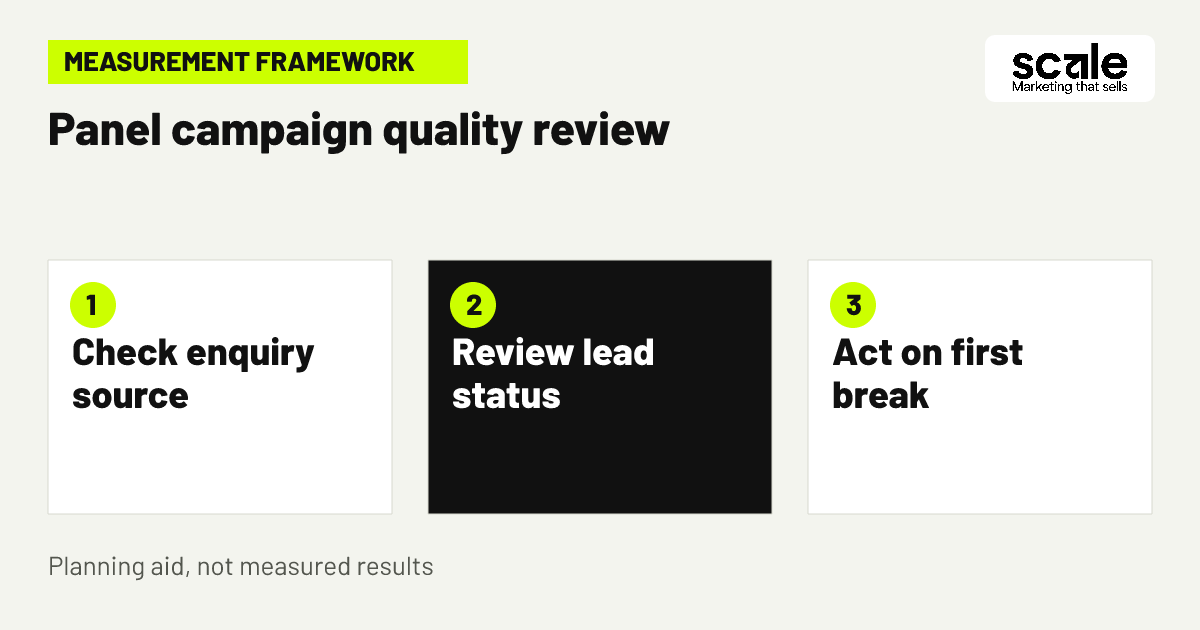
Campaign reports, call records and submitted forms answer different questions. Search terms indicate what people sought, ads and landing pages show the promise they received, and lead records show whether the enquiry matched the work you want. Bring these records together in a regular review instead of judging success from clicks or submissions alone.
Look for recurring patterns. Frequent out-of-area leads point to targeting or page clarity. Many repair calls entering a panel route suggest mixed campaign language. Incomplete forms may indicate a confusing mobile experience or unnecessary fields. Repeatedly uncontacted leads usually require a follow-up ownership check before further campaign changes.
12. Change one controllable element at a time
When a problem appears, choose the earliest proven break and make one focused change. If people reach the panel page but rarely begin an enquiry, review service fit, coverage and the call to action. If many start but do not submit, simplify wording or remove an unnecessary required field. If suitable leads are not contacted, fix routing before rewriting ads.
Keep a change log that records what changed, why and which lead-status signals you will review. This avoids attributing every movement to a new headline when traffic mix, staffing and local demand may also vary. A deliberate sequence creates more useful learning than frequent, unrelated edits.
Marketing mistakes that blur panel leads with repair calls
The first mistake is using one generic electrician campaign and one generic contact page for every service. Diagnose it by asking whether an enquiry record clearly says panel upgrade, repair, another service or unknown. If staff must listen to a call recording or search an inbox to discover intent, the campaign and form are not doing enough qualification.
Another mistake is advertising beyond crew coverage or outside answerable hours. Check rejected locations, missed calls and staff comments before changing bids. A third mistake is counting every form completion as a successful lead. A request may be spam, unsuitable, unresolved or outside the service area, so the record needs a reason rather than one undifferentiated conversion label.
Measure the path from ad click to booked electrical work
Measure the actual lead journey: panel campaign engagement, meaningful contact action, completed enquiry, successful contact, estimate stage and booked job. Keep panel upgrades separate from repair leads so urgent-call patterns do not distort planned-project decisions. Website and advertising events show actions, while staff records establish whether the request was suitable and progressed.
Interpret signals in order. Few contact actions after relevant page visits can indicate an unclear offer, coverage statement or next step. Many form starts but few completions often point to friction or confusing questions. Completed enquiries with little contact activity indicate a handoff problem. A high volume of unsuitable leads calls for a review of location, search intent and service boundaries.
Use the findings to select a practical next action. Repair an unmonitored call route before adding traffic. Clarify coverage before tightening the form. Separate repair wording from panel wording before assuming the market is poor. Marketing outcomes vary, so use lead status and team feedback to guide the next decision.
Conclusion: make panel promotion accountable to booked work
The most effective electrician Google Ads tips keep panel upgrade advertising distinct from urgent repair promotion, then connect every enquiry to a truthful next step and accountable owner. Clear service fit, realistic locations, relevant landing pages, useful forms and call records make it easier to promote the work your crew wants to undertake.
Take one practical next action: submit a test panel upgrade request from a phone and follow it from ad destination to internal lead status. Check the coverage message, form fields, confirmation, notification, owner and recorded outcome. Fix the first break before widening targeting or adding more budget.
Related resources
Electrician Marketing · Google Ads Management · SEO Services · AI Implementations · 10 Electrician Website Conversion Tips for EV Charger Quotes · 11 Electrician SEO Ideas for Local Rewiring Enquiries