
How can Local Services Ads send HVAC enquiries your team can book?
These hvac local services ads ideas are for heating and cooling businesses that want more suitable enquiries without filling the phone queue with work they cannot cover, answer or schedule. The direct answer is to configure the ad presence around real job types, practical territory and reliable response cover, then use dispatcher feedback to improve it. Local Services Ads can be a poor fit when the schedule is already full and there is no workable process for responding to new requests.
This is not a substitute for dispatch planning. Before launch, confirm which services are active, which property types and equipment your team handles, who answers incoming contacts, and what happens when an urgent request arrives at capacity. Scale's HVAC Marketing approach separates urgent repair demand from planned replacement and servicing demand so marketing activity can match the work the business is ready to take.
1. Choose job types your technicians actively want
Start with a short list of work your business can accept now, such as no-cooling repair, no-heat repair, seasonal servicing, system diagnosis or replacement estimates. Review Local Services Ads job types against that list and select only options that match your technicians, equipment scope and booking process. The aim is not to appear for every possible heating and cooling request; it is to make the first contact more likely to become a viable next step.
For example, a business with a strong repair team but limited installation availability can prioritize repair-related requests and handle replacement interest through a separate, planned estimate route. If your business does not serve commercial sites, duct cleaning, appliances or parts-only requests, do not use broad wording that invites those contacts. This decision is useful because the services you provide are one factor in how relevant a business is to a customer's search.
Evaluate the list after real enquiries arrive. Ask dispatch whether each selected category creates bookable work, needs clearer screening, or should be removed. A category can be legitimate but still unsuitable if it regularly requires a technician skill, travel range or appointment window that you do not have.
A practical job-type brief
Write one line for each proposed category: the customer problem, the team that handles it, the area served, the contact route and the reason it is commercially useful. This keeps ad settings aligned with the people who must answer and schedule the work.
Questions to resolve before activation
Check whether the team handles the system type, whether an urgent call can be triaged safely, whether the job needs an estimate rather than immediate booking, and whether staff can explain the next step consistently.
2. Set service coverage from dispatch routes
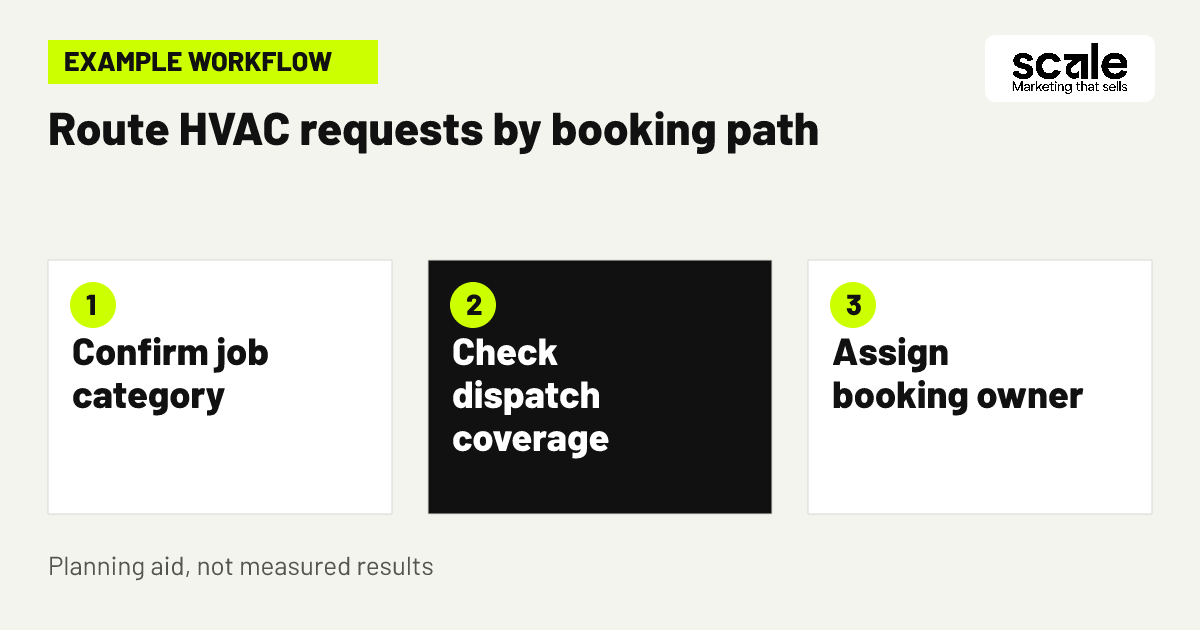
Define HVAC service area coverage using places your dispatcher recognizes as practical, rather than choosing a large territory simply to create more opportunity. Include locations where your crews can travel, diagnose the issue and still keep existing commitments. For urgent repairs, the viable area may be tighter than for a future replacement consultation because response expectations and travel pressure are different.
Create a working coverage sheet with open towns or districts, areas accepted only for planned work, areas temporarily closed and any location exceptions. Give the same sheet to whoever manages Local Services Ads, answers calls and books jobs. This avoids the frustrating situation where an ad suggests local help but the caller learns late in the conversation that the team cannot attend.
Review the sheet whenever vehicle availability, technician cover or seasonal road conditions change. If a location generates many enquiries but few appointments, diagnose whether the issue is travel time, customer type, a misleading profile description or a gap in the scheduling process before expanding or reducing coverage.
3. Route urgent repairs differently from estimates
Example: an HVAC business serves nearby residential areas and has limited evening on-call cover. It presents repair work as an availability check rather than promising an arrival time it has not confirmed. The person answering asks for the address, broad issue and system type, then offers the next practical booking option. This protects both the customer and the dispatch schedule.
The same business treats a request for a new heating or cooling system as a planned estimate. That enquiry is sent to a team member who can arrange a consultation, rather than competing with emergency calls on the same route. The initial questions focus on location, existing system and preferred contact time, not a long technical questionnaire that discourages a legitimate prospect.
Judge the setup by whether repair contacts reach an available dispatcher and whether estimate requests reach the right follow-up owner. If replacement shoppers repeatedly call the urgent line, clarify the profile wording and the handoff. If urgent callers are left waiting, reduce exposure until the team can provide a credible response.
4. Build an answer plan for every contact path
HVAC ad hours should be decided from the moments someone can genuinely respond, not from a desire to look available around the clock. Map normal office coverage, on-call periods, holiday handling, voicemail ownership and the time allowed before a missed contact is returned. Local Services Ads can receive customer contacts through available paths, so the business should check which paths are active and who owns each one.
A simple response plan assigns a named role for calls, messages and booking requests. It also gives that person approved language for an outside-area request, an after-hours breakdown, a parts-only question and a planned replacement enquiry. This reduces inconsistent promises made under pressure.
Review missed calls and delayed responses separately from lead volume. Responsiveness to customer enquiries and requests is relevant to Local Services Ads ad ranking, and missed calls may negatively affect responsiveness. If evening contacts are frequently unanswered, do not assume more evening exposure is useful; first fix the coverage or reduce the availability implied by the business.
5. Make the profile describe the next booking step
Use clear service descriptions that tell a homeowner what happens after they get in touch. For repair demand, describe an availability and service-area check followed by booking where appropriate. For planned replacement work, describe an estimate conversation or consultation. Specific next steps help customers choose the correct route and help staff avoid treating every enquiry as an emergency.
Keep claims supportable. Do not use blanket promises about arrival, financing, rebates, savings or the ability to repair every system unless the relevant terms and operational details are current and verified. A plain statement of the work considered, areas served and contact process is often more useful than a vague claim of being the best choice.
Check profile language against call notes. Repeated questions about whether you serve a particular town, work on a certain system or offer an emergency visit indicate missing or unclear information. Update the message to reduce that uncertainty, then watch whether the same objection becomes less common in later contacts.
6. Treat messages as requests needing a real owner
Messages can give a customer a way to make contact when calling is inconvenient, but they only help if someone can review and respond with a useful next action. Decide whether messages are appropriate for urgent repair work, planned estimates or both. For a breakdown request, a slow exchange can create frustration, so make sure the first reply directs the person to the correct booking route.
Assign message monitoring to a role, not an unnamed shared inbox. Prepare a concise reply that confirms the service area, asks only the details needed to assess fit and explains how booking will proceed. Avoid asking a customer to share unnecessary information in a message; gather only what the team needs to decide whether to offer an appointment.
Evaluate messages by response delays, booking outcomes and common reasons they fail. A high number of incomplete exchanges can signal that the questions are too broad, the reply is too slow or the customer expected immediate help. Adjust the contact path rather than counting every message as a qualified lead.
7. Keep replacements from being lost in repair demand
Urgent repair demand can consume attention during extreme weather, yet planned replacement requests may still be valuable when the business has a sales follow-up process. Give replacement enquiries a distinct owner and a stated next action, such as arranging an assessment or returning a request during a defined business period. Do not leave them in the same queue as emergency dispatch without clear accountability.
An effective handoff note can contain the service area, broad equipment situation, reason for replacement interest, preferred contact method and availability for a conversation. It should not attempt to diagnose the property remotely or promise a system recommendation before the team has completed its normal assessment.
Review whether qualified HVAC leads for replacements receive timely follow-up and whether staff can identify why a request did not progress. If the main issue is lack of estimator availability, reduce promotion of that path temporarily. If the issue is poor fit, revisit job-type selection and profile language rather than asking dispatch to solve a marketing mismatch.
8. Use capacity rules before weather-driven changes
Set written rules for periods when heating or cooling demand suddenly rises. Useful triggers include open technician capacity, a growing callback queue, unbooked urgent enquiries, travel limits and the availability of someone to qualify contacts. The action might be to keep coverage steady, limit it to closer areas, emphasize a planned booking route or pause a category until the team catches up.
Share the rule with dispatch and the person responsible for ads. A manager should not discover after the fact that marketing continued to invite urgent contacts when the schedule was already beyond reach. The goal is not to avoid demand; it is to avoid paying attention to enquiries that cannot receive a reasonable response.
After the busy period, compare the contacts received with the capacity plan. Identify whether the problem was too much demand, insufficient call handling, distant locations or a job type that consistently created unsuitable requests. Use that finding to revise the next seasonal rule instead of making a permanent change based on one difficult day.
9. Ask dispatch to label unsuitable enquiries
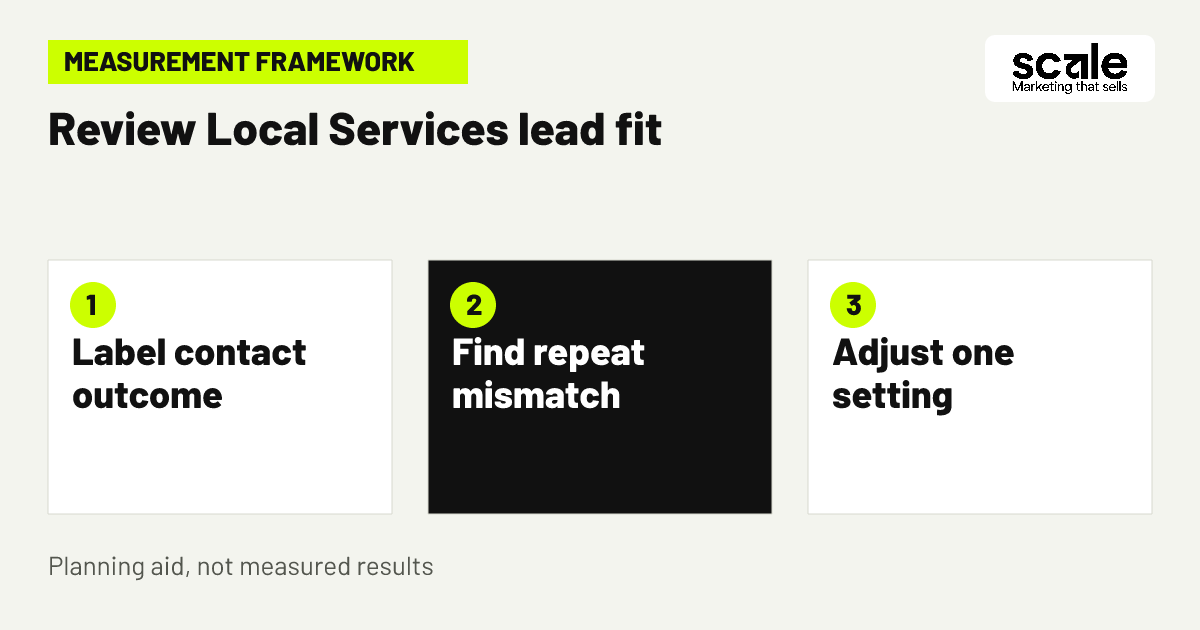
Create a small set of outcomes that the person answering contacts can apply consistently: booked repair, planned estimate, maintenance request, outside area, unsupported service, parts-only, duplicate, no response or no available appointment. These labels turn vague complaints about lead quality into evidence that can guide the next account review.
Keep the labels practical. If there are too many categories, staff will skip them; if there are too few, the reason for poor fit disappears. The best list reflects decisions the business can act on, such as changing coverage, improving wording, reviewing Local Services Ads job types or changing who follows up.
Review the labels with call notes where appropriate. A lead marked unsupported service may reveal an overly broad description, while an outside-area contact may point to a coverage misunderstanding. This feedback loop is more useful than asking staff to remember general impressions at the end of a busy month.
10. Refresh profile quality with accurate business details
Check that the information customers see reflects current operating reality: active services, contact methods, images, response expectations and verification status. Profile quality is one of the factors considered in Local Services Ads ranking, alongside customer-facing elements such as rating, reviews, response time and completed verification checks. The practical priority is accuracy and consistency, not chasing cosmetic changes.
Ask one person to perform a regular profile review against the dispatch brief. They should flag outdated service descriptions, old seasonal wording, confusing photos, unanswered customer questions and any mismatch between what the profile says and what the booking team can offer. Where a platform setting or verification requirement is unclear, check the current Local Services interface before changing it.
Evaluate the review by looking for fewer repeated clarification questions and more consistent handoffs. Do not assume profile updates alone will solve a capacity or response problem. If calls are missed or work is out of area, repair those operational gaps alongside the listing information.
Marketing mistakes that turn HVAC enquiries into dead ends
A common mistake is selecting every broad service category because it seems likely to increase reach. That can invite enquiries for work the team does not want, cannot schedule or does not perform. Diagnose it by reviewing the job requested against the selected services and the call disposition. Remove or clarify categories that repeatedly create the same unsuitable conversation.
Another mistake is using a large service area while relying on staff to decline distant callers later. Diagnose this when booked jobs cluster near the depot but enquiries come from locations that dispatch regularly rejects. Tighten HVAC service area coverage or explain the practical boundary earlier in the contact path.
A third mistake is treating an unanswered call as a normal marketing lead. If missed contacts become common, investigate staffing, routing and the published availability before increasing budget or job types. Outcomes vary, but a measured response plan gives the business better control than broad promotion during a capacity crunch.
What should you measure before expanding Local Services Ads?
Use a regular review that separates total contacts from suitable opportunities. Track contact type, answer or reply status, job type requested, location fit, appointment offered, appointment booked and the reason a contact was unsuitable. Keep repair, maintenance and replacement records distinct because they require different staffing and follow-up paths.
A rise in outside-area enquiries is a signal to inspect territory choices and wording. A rise in missed calls is a signal to improve response cover before seeking additional demand. A high share of unsupported-service requests is a signal to revisit selected categories or profile descriptions. A low number of booked appointments from otherwise appropriate enquiries can point to scheduling friction, unclear next steps or limited availability.
Prioritize the narrowest problem with the clearest evidence. Do not change service coverage, job types and response procedures all at once, because the business will not know what corrected the issue. Keep a short change log stating what changed, why it changed and what dispatch should watch for in the next review.
A lead-quality review agenda
Review a sample of recent contacts with the person who handled them. Ask whether the request matched the advertised service, whether the address was workable, whether the customer received a response, and whether the next step was clear.
When to change the account
Make a change when the same mismatch repeats across several contacts and staff can name a controllable cause. One unusual enquiry is a reason to observe; a recurring pattern is a reason to adjust the setup.
Conclusion: align Local Services Ads with bookable HVAC work
The best hvac local services ads ideas begin with operational honesty: promote the HVAC work your team can handle, cover the areas dispatch can reach and publish contact paths someone can manage. That approach can reduce unbookable enquiries while preserving room for urgent repairs, planned replacements and servicing work when capacity allows.
Take one practical next action today: create a one-page brief listing active job types, open locations, HVAC ad hours, contact owners and the labels dispatch will use for every enquiry. Review it with the people who answer phones before changing the Local Services Ads setup.
Related resources
HVAC Marketing · Google Ads Management · Google Local Services Ads · Email & SMS Marketing · 12 HVAC Google Ads Tips to Book Emergency Repairs