
What should a local service marketing plan solve first?
A digital marketing strategy for local service businesses should first create a reliable path from local demand to a handled inquiry, rather than launch every available channel. This guide is for owners and small teams that need more calls, form requests, or booked consultations but cannot afford to lose track of where inquiries came from or whether the team could serve them. The direct answer is to begin with the services and places that produce viable work, establish lead capture and follow-up, then concentrate early activity in the channels closest to active demand.
Digital marketing can include paid search, paid social, search visibility work, email, attribution, and conversion optimization. Those capabilities work together only when the business has a clear commercial decision behind them. A homeowner seeking an urgent repair behaves differently from a property manager comparing providers for planned work, so the message, landing page, response process, and measurement method should reflect that distinction. A broad channel list is not a strategy; the operating choices connecting demand to service delivery are the strategy.
Which channels deserve priority before your team expands?
Prioritize by intent, local fit, time to response, and evidence that the service can be delivered profitably. Search activity is often the logical first test when people use clear service-and-location language and need help soon. A well-structured local landing page can support organic discovery over time, while paid search can test defined demand more directly. Paid social may be appropriate when a service needs demonstration, seasonal education, visual proof, or a slower consideration period, but it should not be treated as equivalent to a request from someone actively searching.
Email is most useful when the business has permissioned contacts and a genuine reason to stay in touch, such as maintenance reminders, estimate follow-up, renewal timing, or complementary services. It is rarely the first answer to a weak lead intake process. Conversion optimization matters from the beginning because an unclear page, an inconvenient form, or a phone number that goes unanswered can make a promising channel appear ineffective. Confirm that mobile visitors can understand the offer and take the intended action; Google’s advertising guidance also emphasizes making ads and websites mobile-friendly.
A practical customer acquisition plan chooses a narrow initial audience: a defined service, a realistic service area, and a customer type the team wants more of. Do not begin by advertising every job category across every surrounding location. Narrow scope makes it easier to see whether poor outcomes arise from the query, message, landing page, response, qualification, or capacity. Expand only after the team can explain the quality of the inquiries it receives.
Channel selection should also account for operations. If staff cannot answer calls outside working hours, promote scheduling or a concise request form with a stated response expectation instead of inviting urgent calls that cannot be handled. If a service requires on-site assessment, the conversion action may be a qualified inspection request rather than an instant quote. The most appropriate channel is one the business can fulfill consistently, not merely one that can generate attention.
Use intent to separate acquisition from awareness
High-intent activity addresses a person already looking for a solution, while awareness activity introduces a service before a person begins that search. Both can have a role, but their evaluation differs. Early investment usually needs a clearer connection to a request, so allocate more scrutiny and tracking to high-intent activity before funding broad exposure.
Questions to ask before approving a channel
Ask what trigger brings a prospect to this channel, which service they are likely to request, whether the page or message answers that request, and how staff will identify a good prospect. If no one can describe the expected inquiry and its handoff, the channel is not ready for meaningful spend.
What must be ready before changing campaign spend?
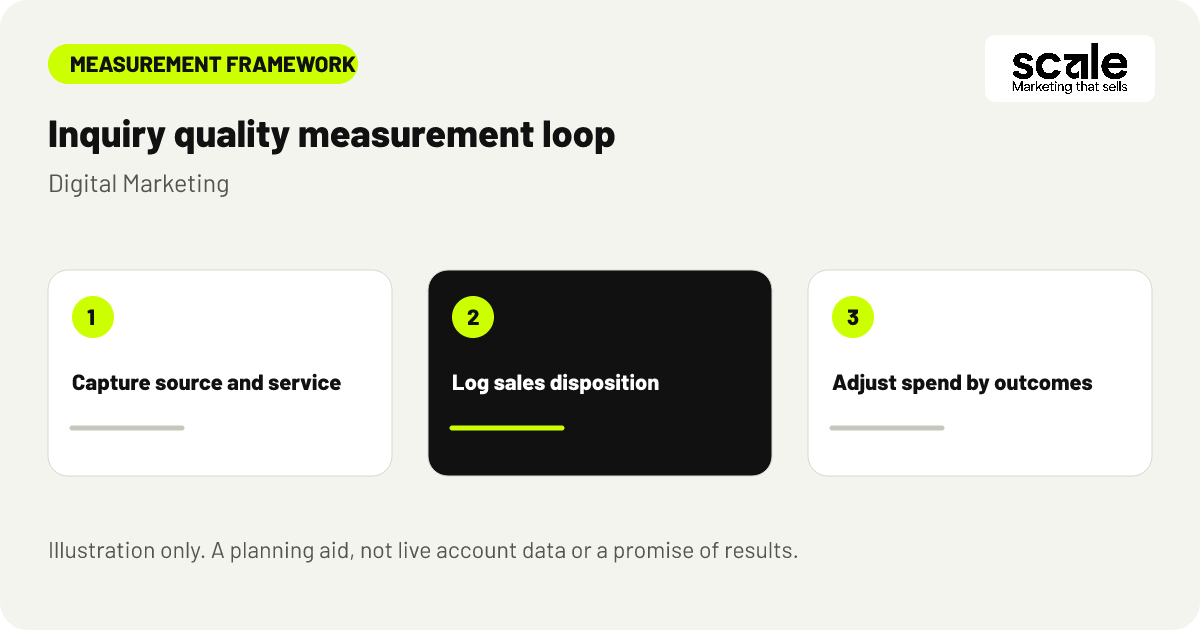
Lead tracking setup is the prerequisite for changing campaign spend. Map every meaningful entry point: tracked phone calls where appropriate, website forms, appointment requests, chat or message submissions, and manually entered offline referrals. For each one, record the source when available, the campaign or landing page where relevant, the requested service, location, contact time, and the eventual sales disposition. The aim is not elaborate reporting. It is a dependable record that lets a manager distinguish a qualified inquiry from a duplicate, a wrong-area request, or a request the team failed to contact.
Test the full path yourself before launch. Submit each form from a mobile device, verify that the correct notification reaches the responsible person, call each advertised number, review confirmation messages, and ensure the inquiry can be found in the team’s lead record. Analytics events can measure specific on-site interactions, including link clicks and custom actions, and can be reviewed through reporting tools when properly configured. Instrument only actions that represent real intent, and verify events in a test environment before treating them as decision-grade data.
Then write a brief that ties the campaign to operations. It should state the chosen service, service boundaries, target locations, exclusions, differentiators that can be substantiated, desired action, response owner, escalation plan, and disqualifying conditions. Add the landing-page promise and the exact information staff need during the first contact. This prevents advertisements from promising a service that dispatch, sales, or field teams cannot provide.
Build the first campaign or content set around a small set of tightly related themes. Match the ad or page language to the customer’s problem without making unsupported claims. Route each theme to the most relevant page, not a generic homepage. Review search terms, messages, page behavior, and lead dispositions together. A channel budget allocation should follow that review cycle, moving attention toward demand that becomes serviceable, qualified opportunities and away from activity that consistently produces poor fit.
A lean implementation sequence for a small team
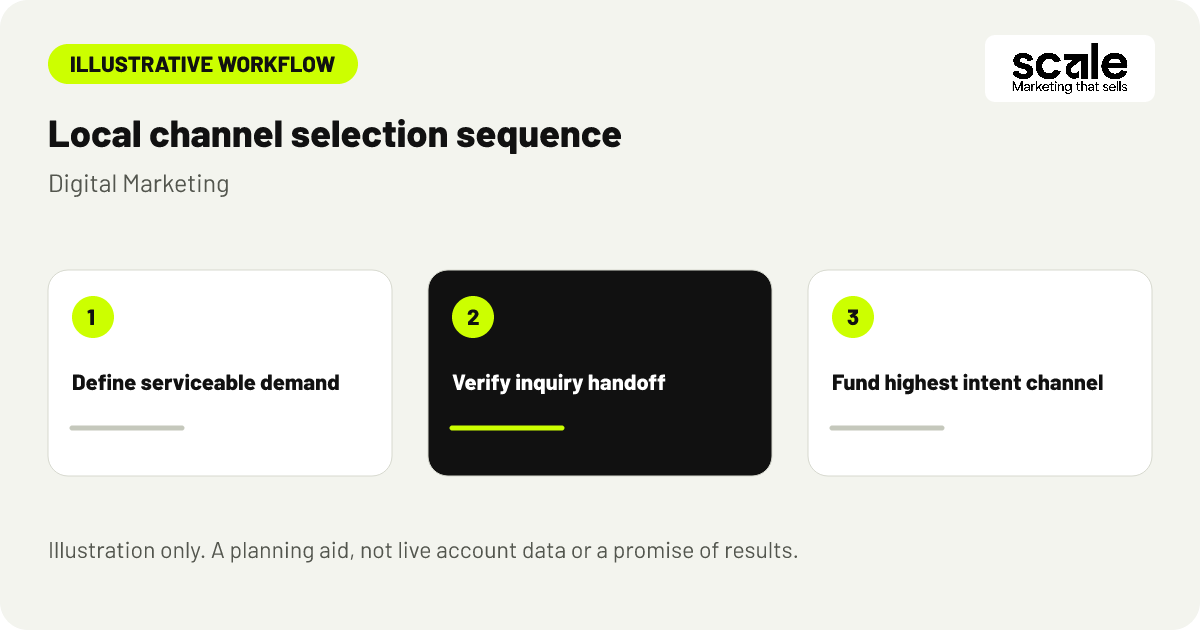
First define serviceable work and exclusions. Next create or revise the page that explains that work, its geography, and the contact action. Then configure lead fields and source capture, test the handoff, prepare the response script, and launch a limited channel scope. Review records with the person handling inquiries before changing the budget or adding new locations.
What the intake record should reveal
A useful intake record lets a manager answer what the prospect wanted, where they are located, how they found the business, whether contact occurred promptly, why the lead was accepted or declined, and what happened next. Free-text notes are valuable for patterns that fixed fields miss, such as a recurring request for an excluded service.
How should a small team allocate attention across channels?
Treat channel budget allocation as a staged commitment, not a fixed formula. Reserve enough effort to operate the selected channel properly: relevant pages, accurate tracking, routine search-term or audience review, and prompt follow-up. Splitting a modest budget among too many campaigns, locations, services, and creative ideas creates too little evidence to diagnose any one of them. It also raises the chance that staff will receive scattered inquiries without learning which requests are worth pursuing.
Give the initial share to the channel with the clearest intent and the best verified handoff. Maintain a smaller exploratory allocation only when there is a reason to test a new audience, message, service line, or local area. Keep organic content and local page improvements as durable work that supports future discovery, but do not use their slower feedback cycle as a substitute for understanding immediate lead quality. Email follow-up can protect value from people who already inquired, provided consent, or are established contacts, but it should align with the customer relationship and service timing.
When choosing between adding traffic and improving conversion, examine the current bottleneck. If qualified visitors abandon a confusing form, cannot find service-area information, or encounter a weak mobile page, improve the conversion path before buying more visits. If the page converts inquiries but the sales process cannot reach them or record the outcome, repair intake and follow-up. More spend is suitable only after the business can show that it handles the demand it already attracts.
Illustrative scenario: narrowing a broad home-service campaign
Illustrative scenario: A local maintenance company advertises several services throughout a wide region, but staff report that many requests fall outside its travel area or involve work it does not perform. The owner sees form totals and call volume but cannot tell which ads or pages led to viable jobs. Instead of adding social campaigns, the team pauses expansion and selects one service category with available crew capacity and a defined coverage area.
The team creates one page that states the problem addressed, the locations served, the factors that affect eligibility, and the preferred request method. Its form asks for location, service need, and a concise description. The call handler uses the same fields in the lead record for phone inquiries. The team tests form notifications and call routing, then labels each inquiry as contacted, qualified, unqualified, scheduled, won, lost, or unresolved. These labels are operational records, not judgments about the person contacting the business.
After enough day-to-day handling to identify patterns, the owner reviews the request language, source information, reasons for rejection, and follow-up notes. If a particular query theme produces requests for excluded work, the team changes the wording or removes that theme. If prospects abandon the form because they need a fast answer, the team may clarify availability or offer a more suitable contact route. The next decision is based on lead quality and capacity, not on surface traffic alone. Outcomes vary with demand, competition, service quality, and follow-up.
Why local campaigns generate activity but not useful inquiries
A frequent mistake is using a single generic message for services with different urgency, price sensitivity, or qualification requirements. Diagnose this by reading inquiry notes beside the message that attracted them. If prospects repeatedly request a service you do not offer, the campaign and landing page need sharper exclusions. If the requests are suitable but the team lacks availability, the issue is operational capacity rather than channel quality.
Another mistake is treating every submitted form or answered call as a success. Raw volume hides spam, duplicate requests, price shoppers outside the service area, and leads no one contacted. Diagnose this by requiring a disposition for every inquiry and investigating any record that remains unresolved. A growing unresolved queue is a warning that the business cannot evaluate the marketing it is funding.
Teams also change too many variables at once: campaign targeting, landing page, offer wording, follow-up script, and service geography. This makes a marketing funnel audit inconclusive because no one can connect a later change to a specific effect. Change the variable closest to the known problem, document the date and rationale, and retain the previous version or notes. Review whether the new path altered inquiry relevance, contactability, or booked-work progression.
Finally, do not assume platform reporting answers the full profitability question. It may identify an interaction, but only the business’s intake and sales records can explain whether the request was accepted, fulfilled, and worthwhile after the cost to provide the service. Reconcile advertising records, site events, and the lead system routinely; discrepancies usually indicate a missing tag, mismatched naming, duplicate capture, or incomplete sales updates.
Which signals show whether marketing creates profitable inquiries?
Measure the funnel in connected stages: targeted visits or engagement where relevant, inquiry actions, contacted leads, qualified leads, scheduled work or consultations, accepted work, and contribution after direct delivery costs. The exact stages depend on the service, but the definitions must be consistent. A profitable inquiry is not simply a low-cost contact; it is an inquiry likely to become work that fits the team’s location, scope, schedule, and margin requirements.
Use a marketing funnel audit to locate the first material break in the path. Many visits with few inquiries can point to a mismatch between message and page, a weak action path, slow page experience, or low-intent traffic. Plenty of inquiries but few qualified leads can mean overly broad targeting, unclear service boundaries, or a form that collects too little context. Qualified leads that rarely reach scheduled work may indicate delayed response, weak contact details, inconsistent sales handling, or capacity constraints.
Review leading signals and business outcomes together. Source and campaign identifiers help explain origin; service requested and location explain fit; contact attempts and response timing explain handling; disposition explains sales quality; accepted-work value and delivery cost explain commercial contribution. Segment the review by service category and geography so a healthy line of business does not conceal an unworkable one. When the data is incomplete, treat that as a measurement task rather than a reason to declare a channel successful or unsuccessful.
Practical next actions follow the signal. If traffic is irrelevant, refine targeting and message specificity. If relevant prospects do not act, improve page clarity and contact options. If forms arrive but go untouched, assign ownership and alerts. If qualified requests do not close, listen to objections, review estimate timing, and check whether the advertised promise matches the sales conversation. If accepted work is healthy but capacity is strained, limit availability or target the services the team can deliver well.
When is a broader digital program not the right move?
A broader program is not suitable when the business cannot define its service area, answer inquiries dependably, distinguish viable work from poor-fit requests, or fulfill additional jobs without harming existing commitments. In those conditions, adding paid social, more keywords, more locations, or additional content tends to magnify the operational problem. First stabilize the offer, intake, and fulfillment process.
It may also be unsuitable to pursue demand for a service with uncertain margins, unstable availability, or required approvals that are not reflected in the marketing message. Use the period to collect operational facts, revise the service brief, and create truthful eligibility guidance. Marketing can then support a clear acquisition decision instead of creating expectations the business must unwind during the first call.
Conclusion: choose one trackable path to serviceable demand
The right digital marketing strategy for local service businesses is a focused operating plan: select a serviceable offer and area, prioritize the channel closest to appropriate intent, make the conversion path clear, and record every inquiry through to its business outcome. Do not broaden the mix merely because a platform is available. The quality of targeting, page relevance, lead handling, and disposition data determines whether expansion is sensible.
As a practical next action, hold a short working review with the person who receives inquiries. Choose one priority service, write its qualification rules and response owner, then test every call and form route from a prospective customer’s point of view. Once those records are dependable, run a contained channel test and use the funnel review to decide what deserves more attention.