Build demand around suitable consultations
Digital marketing strategies for med spa businesses should help prospective customers understand approved services, compare the consultation experience and request an appropriate next conversation. This guide is for med spa owners and managers who want to attract suitable consultation enquiries while keeping clinical suitability, consent and treatment decisions with qualified professionals.
Begin with a promotable-services list: treatments currently offered, provider capacity, consultation locations, approved credentials, permitted claims, approved images and the contact route for each service. A consultation request is not a confirmed procedure, so the marketing journey should make that distinction clear. Outcomes vary, and this is marketing education rather than legal or medical advice.
1. Select priority treatments before selecting channels
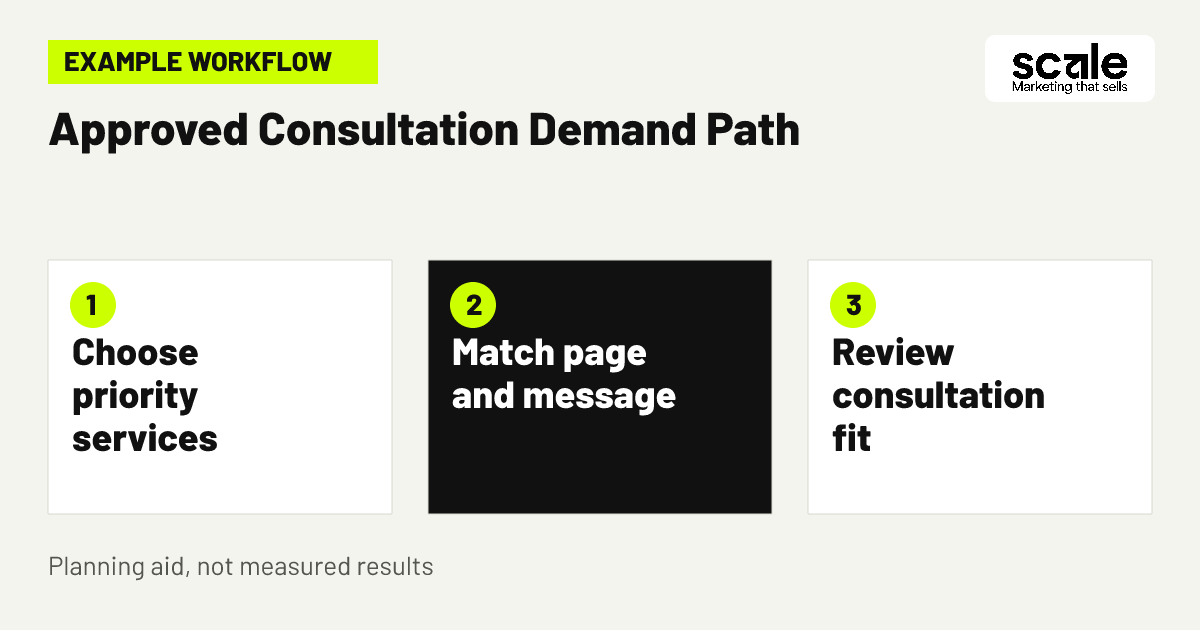
A long treatment menu can make every ad, page and social post feel vague. Choose a focused group of services based on capacity, commercial importance, local relevance and the practice's ability to describe each service accurately. This gives campaigns a clear purpose: generating suitable consultation enquiries rather than broad attention.
Prioritize this when staff receive mismatched requests, the practice has changed its menu or several channels promote different messages. Create a short brief for every priority service covering the approved description, consultation audience, location, call to action, exclusions staff may need to explain and the person who approves claims.
Example: A practice with consultation capacity for a particular aesthetic service can build its campaign around a discussion of that service, rather than suggesting it is appropriate for every visitor. Measure requests by featured service, attended consultations and staff-assessed suitability.
2. Make local discovery details easy to verify
Prospective customers often compare nearby locations, hours, contact methods and treatment availability before they request a consultation. med spa local seo should make real-world information consistent across the practice website and business listings, then send people to a relevant page instead of a generic home page.
Prioritize this for a physical consultation location, a defined service area or recurring confusion about where appointments happen. Check the business name, phone number, address, hours, appointment route and service categories wherever the practice controls a listing. Create location content only when it adds useful, truthful details about access, services and consultations.
Example: A single-location practice can publish a location page that explains where consultations take place, which approved services visitors may ask about and how to contact the team. Review calls, appointment-route use, direction requests where available and location-attributed consultation requests.
3. Build treatment pages for comparison and action
A treatment page should answer the questions that prevent a suitable visitor from requesting a consultation without diagnosing them or promising a particular outcome. Explain the service offered, provider information the practice can substantiate, the consultation process and a clear contact option. Keep detailed suitability decisions for the qualified professional.
Prioritize this when advertising sends traffic to a general page, visitors leave service pages quickly or staff repeatedly answer basic pre-consultation questions. Give each priority service a separate page, a visible consultation action and a readily available privacy notice. Only collect the minimum information needed to route an enquiry.
Example: A page can explain that suitability is discussed during a consultation, identify approved provider credentials and offer a request form. Measure form completions, calls from that page, booked consultations and staff feedback on whether the page set appropriate expectations.
SEO Services can help structure useful treatment and consultation pages around real comparison questions. The practice should review service descriptions, credentials and any clinical wording before publication.
4. Publish educational content with an approval path
Educational content can earn attention before a prospective customer is ready to enquire. Strong topics explain consultation preparation, questions customers may wish to ask, provider credentials the practice can verify and how treatment planning discussions work. It should inform rather than act as personal medical guidance.
Prioritize this when consultation teams hear the same questions repeatedly or treatment pages cannot provide enough context. Set a review workflow: select a topic, draft only supportable information, identify wording requiring professional approval, check image permissions, publish and link to a suitable consultation route. Refresh material when services or policies change.
Example: A guide to preparing questions for an aesthetic consultation can help visitors understand what to discuss without predicting their treatment plan. Track engaged visits, clicks to relevant treatment pages and consultation requests that begin through the content path.
Keep content useful without making outcome claims
Write about the practice process, available services and questions a customer can raise, rather than telling a reader what treatment they need. This approach helps the business demonstrate clarity while preserving the professional assessment that belongs in a consultation.
Sample content brief
Set the audience as people comparing consultation options, name one approved question to answer, identify the professional reviewer, list permitted images and end with a consultation request action. Exclude personal treatment advice, unsupported claims and unapproved visuals.
5. Use approved imagery to explain the practice experience
Visuals can make a med spa feel more understandable, but they can also create avoidable risk when permissions, platform rules or claims are unclear. Focus on approved depictions of the environment, team, consultation setting or service process where appropriate, with accurate supporting text.
Prioritize this before launching social promotion or refreshing a service page. Maintain an image register that records the approved use, consent status, expiry or withdrawal process where applicable and the channels reviewed. Do not assume that an image allowed on one page is allowed in every advertising placement.
Example: Instead of relying on outcome-focused imagery, a campaign can use an approved image of the consultation environment alongside a factual invitation to learn about the practice process. Compare consultation-request quality and page engagement by creative theme, not just clicks.
6. Build review requests into the customer journey
Authentic reviews can help people comparing local providers understand the practice experience. Ask for feedback through a consistent, permission-aware process after an appropriate interaction, without incentives, pressure or screening customers based on whether feedback may be positive.
Prioritize this when the practice has little recent public feedback or staff make inconsistent requests. Decide who sends the request, when it is sent, which review destination is used and how the team responds to feedback. Never use review gating, and avoid sharing treatment details in public replies.
Example: A practice can send a neutral message inviting a customer to share their experience after a completed interaction, subject to its communication permissions. Monitor review volume, themes in feedback, local listing actions and whether recurring concerns identify a website or service-expectation gap.
7. Run search campaigns for active consultation demand
Search advertising can be useful when people are actively looking for nearby providers or a consultation about an approved service. It is most effective when the query theme, landing page and consultation action match. Google Ads is designed to help businesses reach people searching across Google properties, while campaigns and messages still need careful review for this industry.
Prioritize search campaigns after priority services and corresponding landing pages are ready. Start with a narrow group of approved service and location themes, review actual enquiry quality with the consultation team and keep ad language factual. Check current advertising policies and treatment eligibility before launch rather than assuming approval.
Example: A campaign for a consultation at a named local practice can direct visitors to the matching service page and request route. Measure consultation requests, booked consultations, attendance, staff-assessed fit and the source-to-booking path.
8. Use paid social to build considered awareness
Paid social can introduce the practice experience and approved educational messages to people who may not yet be searching. It should not depend on personal-feature claims, sensitive audience assumptions or visuals that have not been cleared for the proposed placement.
Prioritize this when the practice has a clear approved message, useful creative and a landing page that explains the next step. Review each service and image against applicable platform rules before publication. Lead with consultation education, provider information the practice can substantiate or a practical question customers can bring to a consultation.
Example: A short approved message about how the practice approaches consultation discussions can direct visitors to an information page. Compare the quality of consultation requests and subsequent attendance against other awareness messages, then stop creative that attracts poor-fit enquiries.
Paid Social can support an approval-led campaign process centered on education and the practice experience rather than promised results. Platform approval remains outside the practice's control.
9. Create a permission-based enquiry follow-up sequence
A timely, respectful response can help an interested person move from a request to a booked consultation. Follow-up should use documented permission, approved communication tools and only the information needed for the conversation. Keep sensitive treatment details out of advertising audiences and unnecessary message content.
Prioritize this when enquiries wait too long for a response, bookings are incomplete or prospective customers need a reminder to choose an appointment time. Map the steps from enquiry receipt to booking, assign an owner, define an approved response window and create plain-language templates for consented messages.
Example: After a visitor asks for a consultation, the team can send a permission-based message explaining how to choose an appointment time and who to contact with general booking questions. Measure response timing, booking completion, opt-outs and attended consultations.
Email & SMS Marketing can help organize reminders and follow-up around documented permission. A consultation should remain distinct from a confirmed treatment in both messaging and reporting.
10. Give every campaign a focused consultation route
A campaign loses clarity when it sends every visitor to the same broad page or asks them to navigate a complex menu. Build a route that connects one approved message to one relevant page, one understandable consultation action and a thank-you step that explains what happens next.
Prioritize this when traffic arrives but consultation requests are inconsistent, or when staff cannot tell which promotion prompted an enquiry. Check mobile layout, page load behavior, form clarity, click-to-call options and confirmation messaging. Do not ask forms to capture detailed health information merely for marketing attribution.
Example: A local service campaign can lead to a service-specific page, then a short consultation request form and confirmation that the team will discuss availability. Measure page-to-action rate, form completion, call attempts, completed bookings and abandonment points.
11. Plan offers around fit rather than heavy discounts
An offer can create interest, but a broad discount may attract enquiries that do not fit capacity, margins or the experience the practice wants to provide. A med spa marketing plan should state whether an offer is needed, which approved service it covers, its conditions, its end point and the internal review required before publication.
Prioritize offer planning before seasonal pushes, new-service promotion or paid campaign expansion. Consider alternatives to price-led messages, such as clearer consultation availability, an educational guide or a factual explanation of the practice process. Ensure conditions are accurate and receive clinical review where relevant.
Example: Rather than making an open-ended discount the lead message, a practice can invite visitors to request an approved consultation for a priority service and clearly state what the request involves. Measure lead suitability, booking completion, attendance and treatment conversion alongside enquiry volume.
12. Re-engage returning customers with consent
Returning customers may value relevant reminders about the practice, but communication must remain permission-based and should not presume treatment needs. Segment only with information the practice is entitled to use, use approved messages and make it easy for recipients to stop future marketing messages.
Prioritize this when the practice has a documented consent process and wants to encourage appropriate repeat visits without relying entirely on new-customer acquisition. Review contact permissions, message frequency, content approval and opt-out handling before building a sequence.
Example: A consented email can share a general update about consultation availability or approved educational content, then direct recipients to a standard booking route. Measure delivered messages, engagement, bookings associated with the message, opt-outs and the distinction between returning visits and new consultation enquiries.
Avoid marketing mistakes that create poor-fit demand
The common error is treating attention as the goal. Vague service claims, generic landing pages and broad discounts can raise enquiry counts while making the consultation team work harder to identify suitable prospects. Diagnose this by comparing campaign source, request type, booking status, attendance and staff feedback rather than relying on clicks alone.
Another mistake is using images, testimonials or treatment details without a clear approval and permission record. Build a simple pre-publication check for claim support, professional review, image authorization, platform policy review and contact consent. If a message cannot pass the check, replace it with factual information about the practice process.
Do not combine every service into one audience or one report. Separate new consultation enquiries, attended consultations, confirmed treatments and returning customers. This prevents a high-volume campaign from appearing successful when it produces low attendance or inappropriate requests.
Measure consultation quality through to treatment
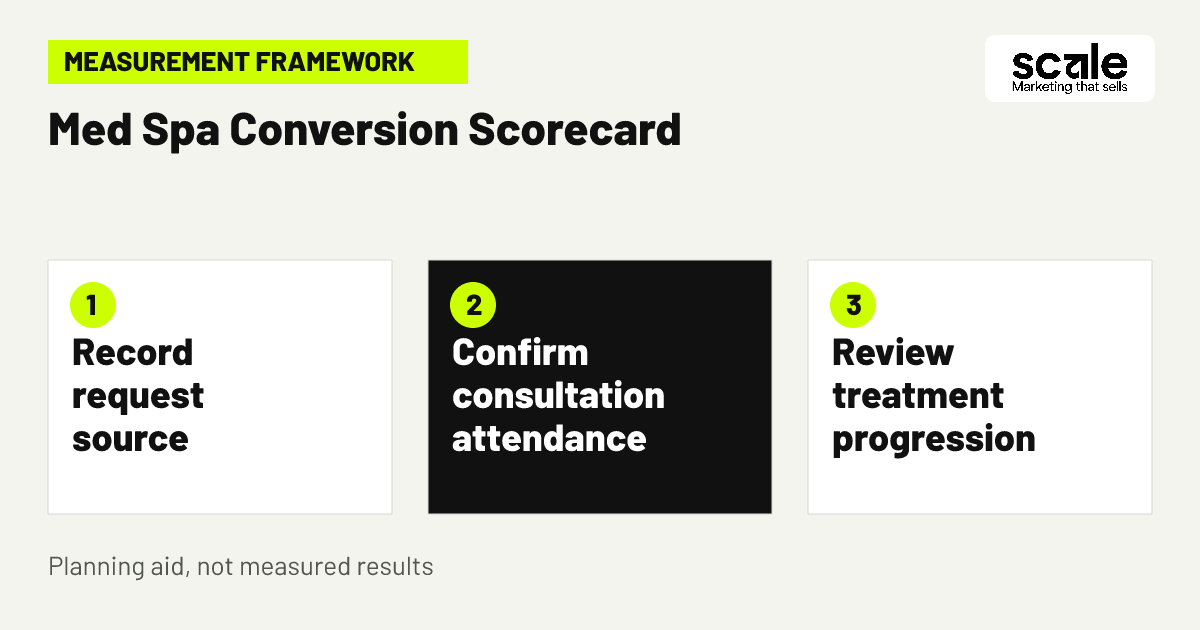
Set up a measurement map before expanding spend. Website analytics events can record meaningful interactions such as consultation-form completion, phone-link clicks, appointment-route clicks and content engagement. Use an event name that describes the action, test it in reporting and avoid sending sensitive treatment information into analytics systems.
The business record should connect each marketing source to a privacy-appropriate status: consultation requested, consultation booked, consultation attended, treatment confirmed where suitable to record, and returning visit. Review these stages by channel and priority service. A rise in requests with falling attendance signals a messaging, follow-up or fit problem; strong attendance with few requests points to a discovery or conversion-path opportunity.
Example: If local listing activity produces calls but few bookings, listen for recurring general questions and improve the destination page or call handling script. If a search campaign produces booked consultations but weak suitability, narrow the message and check whether the landing page makes the consultation purpose clear.
Use a small scorecard for decisions
Review sources, consultation requests, booking completion, attendance, treatment conversion where appropriate, returning visits and communication opt-outs. Add qualitative notes from the consultation team so reporting captures why a lead was or was not a fit.
What to do with each signal
Increase investment only when a channel brings suitable, attended consultations within the practice's capacity. Improve pages or messages when people enquire but do not book. Pause a promotion when it depends on unapproved claims, unclear imagery or consistently poor-fit requests.
Conclusion: start with the consultation journey
The strongest digital marketing strategies for med spa practices connect approved treatment information, local discovery, a clear consultation route and permission-based follow-up. They also separate marketing interest from clinical decisions and measure whether enquiries become attended consultations and appropriate treatments.
Start by selecting priority services, auditing the matching location and treatment pages, then implementing a small measurement scorecard before adding campaigns. Once those foundations are reviewed, test one approved search or social message at a time and use consultation quality to decide what deserves expansion.
Related resources
Med Spa Marketing · SEO Services · Paid Social · Email & SMS Marketing